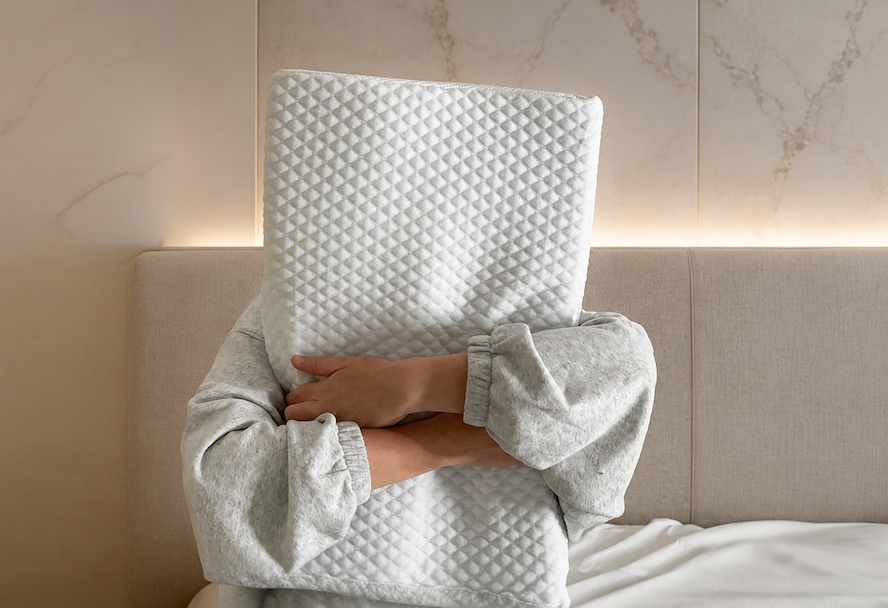
Uneven hips can make something as simple as going to bed feel surprisingly complicated.
Instead of easing discomfort, lying down may sometimes highlight tension in the lower back, hips, or legs, leaving you awake and in pain. This is often because the pelvis plays a key role in overall spinal alignment, and when it’s slightly off balance, it can affect how the body settles during sleep.
The positive news is that with the right positioning and support, you can reduce strain overnight and help the body rest in a more neutral and relaxed state. Here’s how to sleep with uneven hips.
What Causes Uneven Hips (Lateral Pelvic Tilt)?
Uneven hips, sometimes referred to as a lateral pelvic tilt, occur when one side of the pelvis sits higher than the other. This imbalance can be subtle or more noticeable depending on the individual (ScienceDirect, 2013).
In many cases, lateral pelvic tilt develops gradually due to everyday habits rather than a single injury. Muscle imbalances are a common factor, particularly when one side of the body becomes tighter or stronger than the other. Over time, this can gently pull the pelvis out of level.
Posture also plays a significant role. Regularly standing with weight shifted onto one leg, always sitting in the same position, or favouring one side when carrying loads can all influence pelvic alignment, especially if you do not pay attention to your posture.
Even sleep habits may contribute. Consistently lying on the same side without proper support can encourage asymmetry and uneven hips over time.
Also, when the pelvis is uneven, it can affect how the spine and surrounding muscles function, including during rest and relaxation. This is why sleep position becomes especially important.
Best Sleeping Position for Uneven Hips
The aim during sleep is not to force perfect alignment, but to reduce strain and encourage a more balanced position across the hips, spine, and shoulders.
Here are some recommended ways for how to sleep with lateral pelvic tilt.
Back Sleeping With Balanced Support
Lying on your back can help distribute weight evenly across both sides of the body.
To improve comfort, a small level of support under the knees can help reduce tension in the lower back and encourage a more natural pelvic position.
Side Sleeping With Proper Alignment
If back sleeping isn’t comfortable, side sleeping can also work well — as long as the hips are properly stacked. The key is avoiding any forward or backward rolling of the top hip, which can reinforce imbalance.
Placing a pillow between the knees helps keep the pelvis level and prevents the upper leg from dropping forward. This small adjustment can make a noticeable difference in spinal alignment.

Use Targeted Pillow Support
A specialised adjustable pillow, like the Groove Adjustable Pillow, can help maintain alignment between the head and neck, which indirectly supports the spine and pelvis. If the upper body is out of position, it can cause twisting through the torso.
A leg pillow, like the Combination Pillow, placed between or alongside the legs can also help stabilise the hips. This prevents rotation during the night and encourages both sides of the pelvis to stay more level.
The goal is simple no matter which sleep aid you choose. Keep the hips, spine, and shoulders as stacked and relaxed as possible, and prevent your body from twisting or rolling fowards.
Sleep Positions to Avoid If You Have Uneven Hips
Certain positions may make imbalance more noticeable or increase strain over time.
When learning how to sleep with uneven hips, you should avoid:
-
Sleeping on the stomach is generally best avoided, as it can encourage rotation through the pelvis and lower back. This position often forces the spine into a twisted shape, which may worsen asymmetry.
-
Side sleeping without any support between the knees can also be problematic. Without something to separate the legs, the top hip may drop forward, reinforcing uneven alignment and hip discomfort.
It’s also worth avoiding twisted sleeping positions. For example, when the upper body rotates in a different direction to the hips while side sleeping. These patterns can place uneven stress through the spine overnight.
Exercises to Help Fix Lateral Pelvic Tilt
While sleep positioning can reduce strain, longer-term improvements often come from addressing the underlying muscle imbalance during the day.
The best way to work on lateral pelvic tilt is through gentle stretching and strengthening, as these help bring the pelvis closer to a neutral position over time. Tight areas such as the hip flexors and lower back may benefit from regular stretching, while weaker muscles (e.g., the glutes and core) often need strengthening work (Ginta, 2017).
Helpful exercise examples include:
-
Glute bridges for pelvic stability
-
Side-lying leg raises for hip strength
-
Hip flexor stretches to reduce tightness
-
Core engagement exercises such as modified planks
Before you get started, you must remember that movements are not about quick fixes. Do not expect to see changes overnight. Rather, focus on gradually restoring balance and improving how the pelvis functions day to day.
It’s recommended that you pair these exercises with a proper sleeping set-up, such as memory foam pillows, and, in some cases, medical advice for the best results.
Final Thoughts
Improving sleep comfort with uneven hips and lateral pelvic tilt often comes down to small, consistent adjustments that reduce strain and support better alignment. The right pillow setup can help the body settle into a more natural position, with a lower chance of discomfort through the small hours.
And don’t forget, an Adjustable Pillow supports proper head and neck alignment, while a Combination Pillow helps stabilise the hips and prevent twisting, creating a more supportive sleep environment for better rest and recovery.
Achieve better sleep with a Groove pillow today.
References
-
Ginta, D. (2017). 5 Lateral Pelvic Tilt Exercises. [online] Healthline. Available at: https://www.healthline.com/health/fitness-and-exercise/lateral-pelvic-tilt-exercise.
-
ScienceDirect. (2013). Lateral Pelvic Tilt - an overview | ScienceDirect Topics. [online] Available at: https://www.sciencedirect.com/topics/nursing-and-health-professions/lateral-pelvic-tilt.