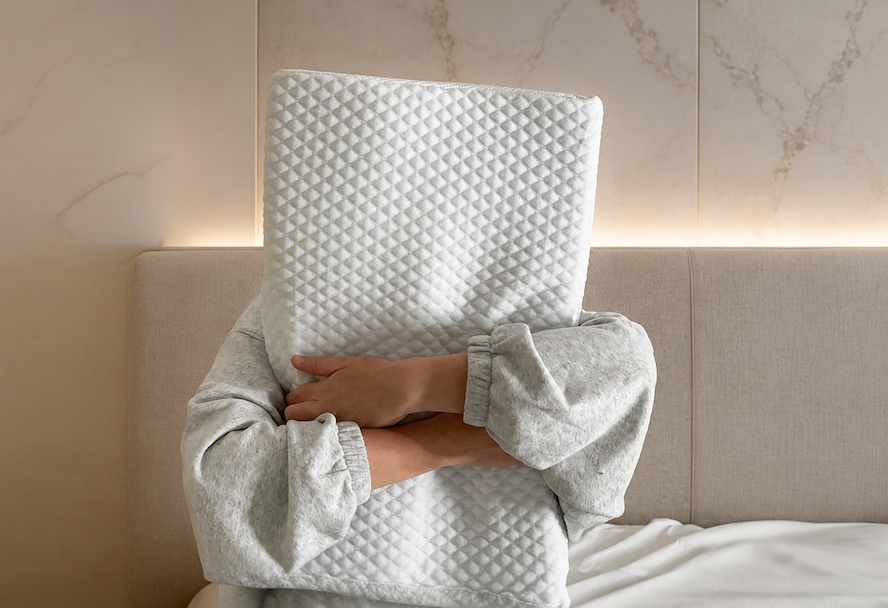
For many people, lying down brings relief after a long day on their feet. It’s that “ahhh” moment once you get home from work.
However, if you’re living with flat back syndrome, it can sometimes feel the opposite, and discomfort may actually increase when you try to rest. That’s because sleep position plays a much bigger role in spinal comfort than most people realise.
This article explores how to sleep with flat back syndrome, and how sleep setup can make a m
What Is Flat Back Syndrome?
Flat back syndrome is a condition in which the spine loses some of its natural curvature and becomes straight, particularly in the lower back (Medical News Today, 2022).
A healthy spine has gentle curves that help distribute weight evenly and absorb impact. When these curves become reduced or flatten out, the spine can appear straighter than normal without the usual ‘S’ shape.
This change in spinal alignment can affect posture, balance, and the way muscles function throughout the body, leading to excess strain and discomfort. Instead of supporting you efficiently, the muscles often have to work harder to keep you upright.
Over time, this can lead to fatigue and stiffness, especially when lying down for long periods. Because the spine is designed to function with its natural curves, even simple rest positions can feel “off” or even painful when those curves are reduced.
The main symptoms associated with flat back syndrome include chronic pain, difficulty standing upright, and difficulty with daily tasks (Columbia Neurosurgery in New York City, 2021).
Why Sleeping Can Be Uncomfortable With Flat Back Syndrome
Sleep is all about rest and recovery, and unfortunately, flat back syndrome can make it harder to fully switch off.
One of the main reasons it is uncomfortable on your back is pressure distribution. Without natural spinal curvature, weight is not distributed evenly across the body when lying down, which can cause extra strain.
Flat or poorly supported positions can place additional strain on the lower back and surrounding muscles. Instead of resting, these muscles may stay slightly engaged to compensate for the lack of support.
Pillow choice at night can also make a big difference. If the head and neck are not properly supported when you sleep, the upper spine can fall out of alignment, creating tension that travels down the back. This is why proper pillows and the best sleeping position for flat back syndrome are so important.

Best Sleeping Position for Flat Back Syndrome
Knowing how to sleep with flat back syndrome often comes down to knowing which positions support flat backs and which make the syndrome worse.
Of course, there’s no right position for everyone, but the following postures are recommended for those with decreased spinal curvature. Try them out and note what works best for your body.
Back Sleeping With Gentle Support
Lying on your back is often the most supportive position because it allows weight to be distributed more evenly.
However, for flat back syndrome, it can help to add gentle support under the head, neck, or even slightly under the knees to encourage a more natural spinal curve.
The goal is not to force the spine into an extreme position, but to reduce strain and support a neutral alignment. The Groove Adjustable Pillow is a good fit here, as it can be adjusted to your body’s needs through removable memory foam panels.
Slight Elevation for Comfort
Some people find that a slightly raised upper body helps reduce tension with flat back syndrome.
This can also be achieved with an adjustable pillow setup or a supportive wedge-style arrangement, allowing the spine to rest in a more relaxed position that is not completely flat across the mattress.
Side Sleeping With Alignment Support
If back sleeping is too uncomfortable, side sleeping can also work well with flat back syndrome. Here, the key is keeping the spine aligned from head to hips.
A pillow between the knees, like the Groove Combination Pillow, can help prevent the lower back and pelvis from twisting, reducing strain through the spine.
Bonus points if the pillow is made from memory foam, as this specialised material can further absorb pressure.
Avoiding Completely Flat Positions
Lying completely flat without any support may increase pressure on the lower back and make discomfort worse.
Instead, focus on making small adjustments and experimenting with proper sleep aids and pillow to make a noticeable difference.
Using an Adjustable or Combination Pillow
Proper pillow support makes a world of difference, and there are different options for flat back syndrome symptoms.
An adjustable pillow, like the Groove Adjustable Pillow, can help support the neck and upper spine more effectively by adapting to your preferred position.
Similarly, knee or ‘between the leg’ pillows, like the Groove Combination Pillow, can help reduce twisting and encourage a more natural sleeping posture.
Groove® Combination Knee pillow

What to Avoid When Sleeping With Flat Back Syndrome
Just as important as choosing the right position is avoiding the ones that may increase discomfort.
Experts suggest avoiding the following habits:
-
Sleeping completely flat with no support.
-
Pillows that are too high or too low, as they can strain the neck.
-
Twisting through the spine during sleep, especially in the lower back.
-
Positions that flatten the spine further rather than supporting its natural alignment.
The habits above can place extra stress on already overworked muscles and make it harder for the body to fully relax overnight. Instead, you want to aim to keep your body as supported and relaxed as possible.
The Final Summary
Though flat back syndrome and its associated symptoms can be uncomfortable, finding the right sleep setup can make a real difference to comfort and recovery when living with the condition.
Small changes to your pillow arrangement and sleeping position can help reduce strain and support better alignment throughout the night, and these are further improved when combined with ergonomic pillow support.
Get a head start today with Groove’s selection of memory foam pillows.
References
-
Columbia Neurosurgery in New York City. (2021). Flatback Syndrome. [online] Available at: https://www.neurosurgery.columbia.edu/patient-care/conditions/flatback-syndrome.
-
Medical News Today. (2022). Flatback syndrome: Symptoms, treatment and causes. [online] Available at: https://www.medicalnewstoday.com/articles/flatback-syndrome.