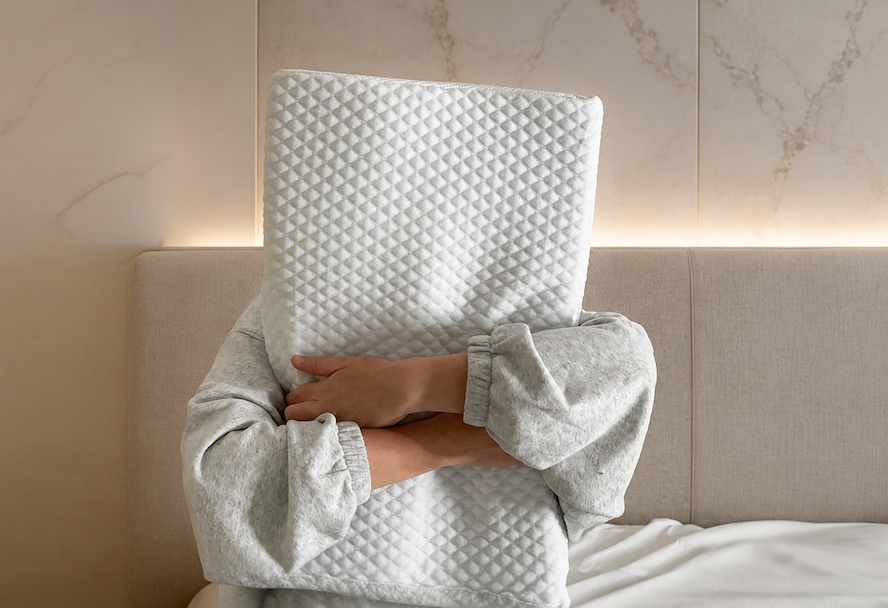
If you often wake up with a stiff neck, tight shoulders, or lower back pain, your sleep posture may be to blame. Many people focus on how long they sleep, but not on how they sleep. Poor positioning in bed can slowly pull your spine out of alignment overnight.
The good news is that small adjustments to your sleep position and pillow support can make a noticeable difference. This article explores how to align your spine in bed for better, healthier sleep.
What Proper Spinal Alignment in Bed Actually Means
Spinal alignment in bed means keeping your body in a neutral position while you sleep. The spine is made up of three sections called cervical, thoracic, and lumbar (National Spine Health Foundation, 2023). Simply, spinal alignment means that these sections (e.g., your head, shoulders, and hips) should stay in a straight line, without tilting or twisting.
Alignment is critical for your back. When your spine is aligned, your muscles, joints, and nerves in the region are under less strain. This means your body can fully relax, which helps reduce tension and supports recovery overnight.
On the other hand, poor alignment, such as a tilted neck or twisted hips, can put pressure on certain areas for hours at a time. Over time, this can lead to ongoing discomfort and stiffness. In rare cases, it can even cause chronic pain.
Best Sleeping Positions To Align Your Spine At Night
Some sleeping positions are better than others for your back, and sometimes, it’s easy to fall into poor sleep habits that aren’t as healthy as you'd think.
If you’re researching ‘How to sleep to realign your spine?’, these are the positions you should try for better alignment.

Back Sleeping with Support
Sleeping on your back is one of the easiest ways to keep your spine aligned, as long as your head and neck are properly supported. Supportive pillows, like the Groove Adjustable Pillow, help keep your neck in a neutral position while allowing slight elevation to reduce pressure.
Side Sleeping with Proper Spacing
Side sleeping is extremely popular and can also support alignment, but only if the space between your head and shoulders is filled correctly.
Special sleep aids can help you create a healthy setup. The Groove Adjustable Pillow can be adjusted to prevent your neck from dipping or tilting upwards.
When sleeping on your side, you should also keep your hips and shoulders stacked on top of each other. In this case, a pillow between the legs, like the Combination Pillow, helps stabilise your body and prevents you from rolling forward or twisting during the night.
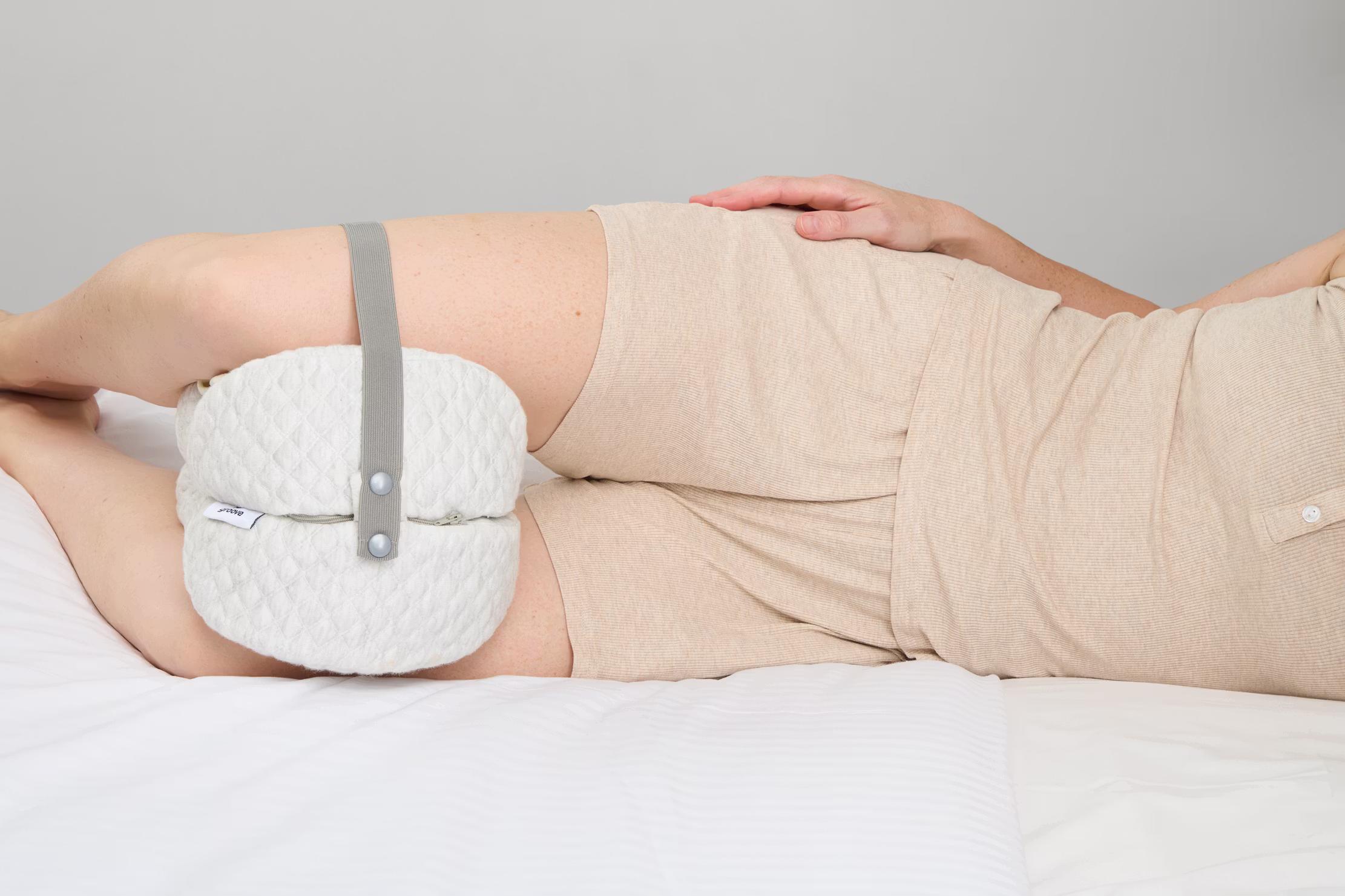
See the Combination Pillow now
Support Your Whole Body
As you can see from the sleeping positions above, supporting the body is a key part of aligning your spine.
Using pillows to fill gaps and support your torso helps prevent uneven positions and keeps your spine in line throughout the night. Memory foam pillows can even reduce pressure, thereby lessening pain and increasing comfort.
The Groove Adjustable Pillow and Combination Pillow can both be used to complement your body. You can adjust the pillow height for your neck and use the leg pillow for full body support.
How to Tell If Your Spine Is Aligned in Bed?
It can be difficult to know if your spine is aligned, especially after years of sleeping in whatever position feels best to you.
However, you can check if your spine is aligned with this simple checklist:
- Your head is not tilted up or down
- Your neck feels supported, not strained
- Your shoulders and hips feel level, not twisted
- You are not waking up with stiffness or pain
- Your body feels relaxed rather than tense
If most of these feel right, your setup is likely working well.
Does Sleeping On Your Back Realign Your Spine?
Sleeping on your back can help support spinal alignment, and many experts will suggest back sleeping as an option. But positioning yourself on your back is not an automatic fix. You still need to be wary of your positioning.
The key to healthy back sleeping is to keep your head and neck in a neutral position and your lower back supported.
If your pillow is too high or too flat, it can push your spine out of alignment. Keeping your hips level and your posture supported is what makes the real difference in this position.
What To Avoid When Trying to Align Your Spine
Some common sleep habits can undo your efforts to improve spinal alignment. Avoiding these can help you maintain a more stable and supported position overnight.
Avoid the following:
- Pillows that are too high or too flat
- Sleeping on your stomach, which twists the neck
- Letting your body collapse or rotate during sleep
- Ignoring arm and shoulder positioning, which can pull the upper body out of line
Last Thoughts
Keeping your spine aligned in bed depends on how well your pillow and overall setup keep your spine in a neutral position. Luckily, you can improve alignment starting tonight by adjusting your sleep position and using the right support.
See all of the Groove Pillows here to find the right ergonomic memory foam support for your bedroom.
See the Combination Pillow now
References
- National Spine Health Foundation. (2023). Improve Posture & Alignment for Your Spine | National Spine Health Foundation. [online] Available at: https://spinehealth.org/article/improve-posture-alignment-for-your-spine/.