
Medically reviewed by Dr Divyansh Jain, MD, MSc
A Baker’s Cyst can leave you feeling uncomfortable during the day and restless at night. However, you can use some tips and tricks to sleep better and feel refreshed the next day. You're in the right place if you’re tired of being tired.
In this guide, you’ll learn how to sleep with a Baker’s Cyst, what causes the condition, when you should seek medical advice and some practical ways to manage discomfort.
Baker’s Cyst: What Is It & How To Diagnose It
So, what is a Baker’s Cyst?
A Baker’s Cyst, also known as a popliteal cyst, is a fluid-filled swelling that develops behind the knee. In adults, it commonly develops when arthritis or an internal knee injury causes excess synovial fluid to collect behind the knee (American Academy of Orthopaedic Surgeons).
Excess joint fluid can pass into a space behind the knee and accumulate there, creating the characteristic swelling.
A confirmed Baker’s Cyst is non-cancerous. However, any new or unexplained lump behind the knee should still be assessed by a healthcare professional, as other conditions can look similar.
A doctor can often diagnose a Baker’s Cyst through a physical examination. Ultrasound may also be used to determine whether a lump is fluid-filled and help rule out other possible causes.
What Causes & Aggravates a Baker’s Cyst?
Baker’s Cysts are commonly associated with conditions that cause inflammation and excess fluid within the knee joint.
These can include:
Osteoarthritis
Rheumatoid arthritis
Meniscal tears
Cartilage injuries
Other conditions that cause persistent knee swelling
Some Baker’s Cysts cause no symptoms at all. When symptoms do occur, they can include a lump or feeling of fullness behind the knee, pain, swelling, stiffness and difficulty bending the knee.
Sudden calf pain, swelling, warmth or changes in skin colour need urgent medical assessment because a ruptured Baker’s Cyst and a deep-vein thrombosis (DVT) can cause very similar symptoms and cannot reliably be distinguished at home.

What Aggravates a Baker’s Cyst?
Symptoms may become worse after activity or when the knee is held at the end of its bending or straightening range (Mayo Clinic).
If certain activities aggravate the pain, temporarily reducing them may help. However, complete rest usually isn’t necessary. Gentle movement within a comfortable range can help prevent unnecessary stiffness unless your healthcare professional has advised otherwise.
Rarely, a Baker’s Cyst can rupture spontaneously, allowing fluid to track down into the calf. This can cause sudden pain, swelling and sometimes discolouration extending towards the ankle.
Because these symptoms can resemble a blood clot, seek urgent medical assessment rather than attempting to diagnose a rupture yourself.
The Impact of Baker’s Cyst on Sleep
A Baker’s Cyst can affect sleep if pain, swelling or stiffness makes it difficult to find a comfortable position.
A very large cyst can also rarely compress nearby nerves or blood vessels, potentially causing symptoms such as numbness, weakness or increased swelling.
However, disrupted sleep isn’t a defining symptom of a Baker’s Cyst. If you have a new lump behind your knee, you should still have it assessed even if it isn’t painful or affecting your sleep.
Comfortable sleep can support your general wellbeing and make coping with knee pain easier, but sleep itself doesn’t treat or shrink a Baker’s Cyst. Improvement usually depends on how the cyst behaves and whether the underlying knee condition is managed.
If you're struggling to find a comfortable position, you may also find our guide on how to improve your sleep.
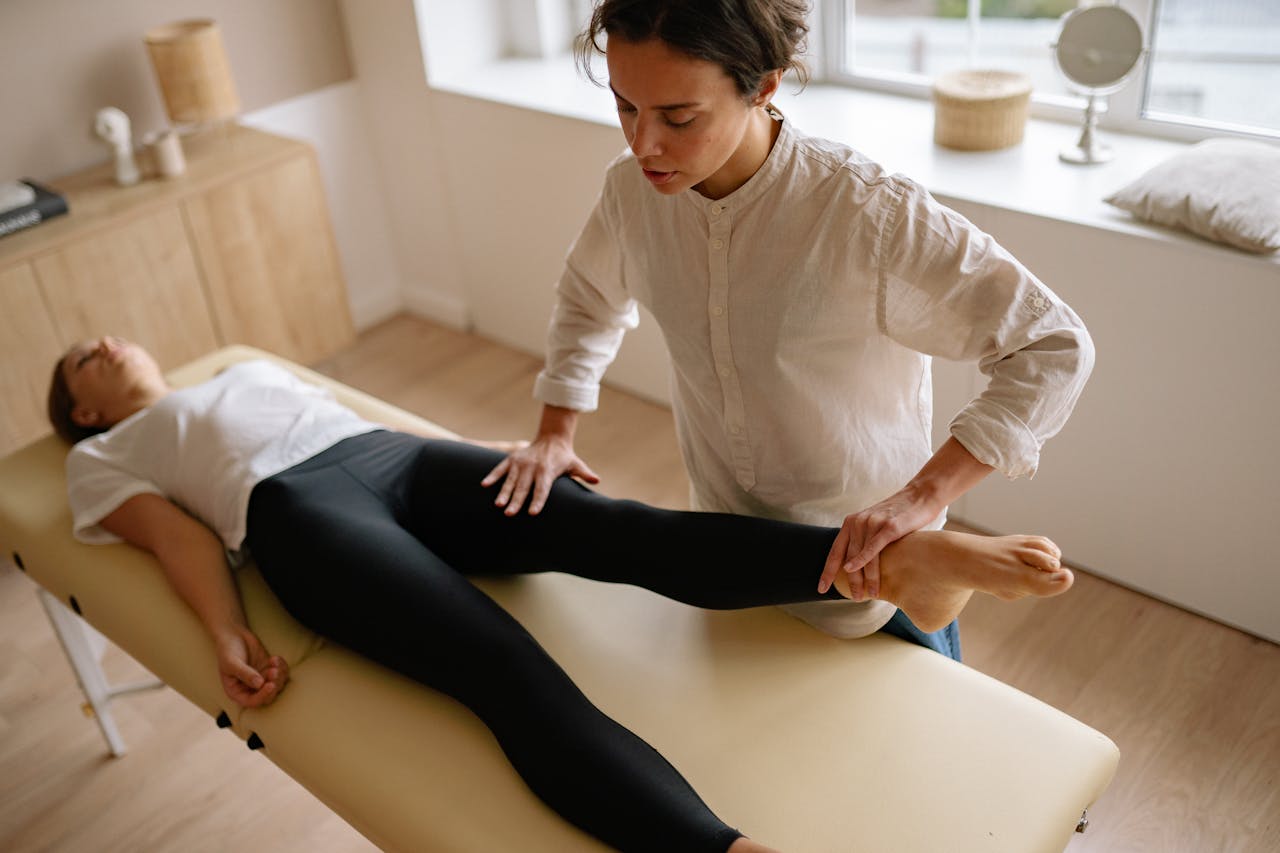
How To Sleep With a Baker’s Cyst
There isn’t a medically established “best” sleeping position for a Baker’s Cyst. Instead, aim for the position that causes the least pain and avoids direct pressure behind the affected knee.
When lying on your back, you may find it comfortable to gently support the lower leg beneath the calf and ankle. Make sure the support doesn’t press directly against the cyst or force the knee into an uncomfortable position.
If you prefer sleeping on your side, place a pillow between your legs so the affected knee doesn’t press directly against the other leg or twist during the night.
Whichever position you choose, stop using a support if it increases pain, tingling, numbness, swelling or pressure behind the knee.
Optimal Sleeping Positions for a Baker’s Cyst
Rather than looking for one “optimal” position, experiment carefully with back and side sleeping to find what feels most comfortable for your knee.
When sleeping on your side, keeping support between the legs can prevent the affected knee from pressing against the opposite leg and may reduce unwanted twisting.
A lower-leg pillow, such as the Groove Combination Knee Pillow, may be used for positioning and comfort. However, it shouldn’t be placed firmly against the cyst or used in a way that forces the knee into marked flexion.
An ordinary pillow or folded blanket can also provide adequate support. The important thing is finding a position that feels comfortable rather than relying on a particular type of pillow to treat the condition.
Gentle elevation of the lower leg may also help temporarily reduce swelling and discomfort.
Shop The Groove Combination Knee Pillow
How Long Does a Baker’s Cyst Last?
There’s no single recovery timeline for a Baker’s Cyst.
Some cysts improve within weeks as swelling in the knee settles, while others can persist or recur for months if the underlying knee condition remains active (Cleveland Clinic).
Reduced swelling, tightness and pain may indicate that symptoms are improving, although cysts can fluctuate in size.
Some Baker’s Cysts resolve without specific treatment. Persistent or painful cysts may require treatment of the underlying knee condition, which could include physiotherapy, treatment for arthritis or, in selected cases, aspiration or corticosteroid injection. Surgical removal is rarely required (Mayo Clinic).
When To Seek Medical Help
Arrange a clinical assessment for any new or unexplained lump behind the knee, particularly if it is enlarging, hard, pulsating, painful or associated with restricted knee movement.
Seek urgent same-day medical assessment if you develop:
- Sudden or increasing calf pain or swelling
- Warmth, redness, bruising or darker skin colour over the calf
- A sudden feeling that fluid has tracked down the calf
- New numbness, weakness, a cold foot or marked leg swelling
- Fever alongside a hot, swollen and very painful knee
- Inability to bear weight or significant symptoms following an injury
A ruptured Baker’s Cyst and DVT can look very similar, so don’t try to distinguish between them yourself.
Call emergency services immediately if leg pain or swelling occurs alongside sudden breathlessness, chest or upper-back pain, coughing up blood, a very fast heartbeat, collapse or fainting. These can be symptoms of a pulmonary embolism (NHS).
Final Words
A Baker’s Cyst is a fluid-filled swelling behind the knee that often develops alongside another knee problem, such as arthritis or a meniscal injury.
If it’s affecting your sleep, there isn’t one position that everyone needs to use. Instead, avoid direct pressure behind the knee, support the affected leg where comfortable and avoid positions that increase pain or twisting.
Pillows can make positioning more comfortable, but they won’t drain, shrink or treat a Baker’s Cyst. If you have a new lump, persistent symptoms or sudden calf pain and swelling, seek medical advice.
If side sleeping feels most comfortable, the Groove Combination Knee Pillow can be positioned between the legs to provide additional support without placing direct pressure on the back of the knee.
Shop The Groove Combination Knee Pillow
References
- American Academy of Orthopaedic Surgeons. Baker’s Cyst (Popliteal Cyst). https://orthoinfo.aaos.org/diseases--conditions/bakers-cyst-popliteal-cyst/
- Mayo Clinic. Baker cyst - Symptoms and causes. https://www.mayoclinic.org/diseases-conditions/bakers-cyst/symptoms-causes/syc-20369950
- Mayo Clinic. Baker cyst - Diagnosis and treatment. https://www.mayoclinic.org/diseases-conditions/bakers-cyst/diagnosis-treatment/drc-20369955
- Cleveland Clinic. Baker Cyst. https://my.clevelandclinic.org/health/diseases/15183-bakers-cyst
- NHS. Pulmonary embolism. https://www.nhs.uk/conditions/pulmonary-embolism/