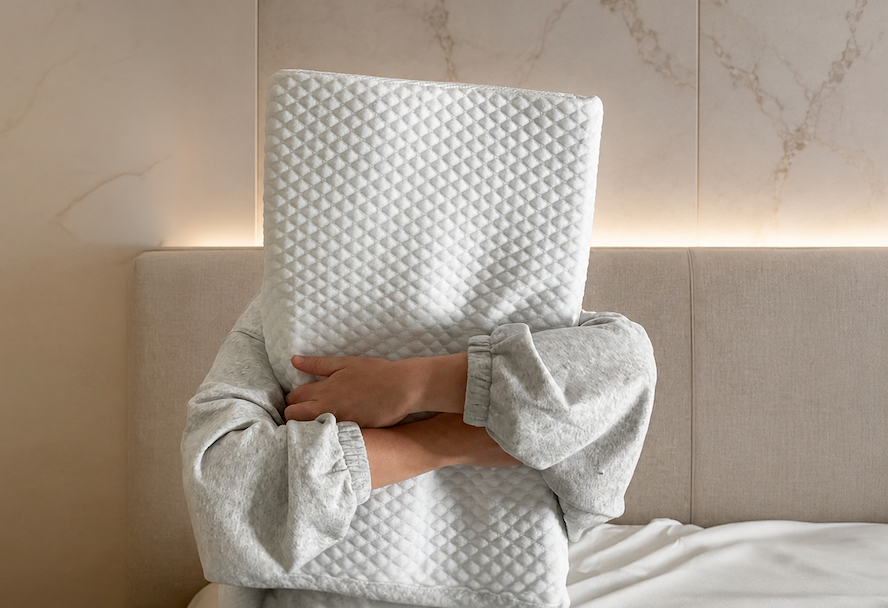
If you've ever woken with a pounding head after a restless night, or noticed a headache creeping in alongside a stiff neck and tired eyes by lunchtime, you'll know how much a bad night's sleep can follow you into the day. The best pillows for headaches won't promise to make them disappear, but they can help give you a better night’s sleep so that you’re less likely to suffer from migraines or headaches caused by insufficient rest.
A pillow is a vital part of the sleep set-up. One that's too high or low can leave your neck feeling uncomfortable, while others can cause you to overheat or repeatedly wake up in the night. For people who experience migraines, poor or disrupted sleep can also be a trigger, making a comfortable sleep set-up even more important.
That doesn't mean there's one special "migraine pillow" you need to buy. Instead, this guide looks at the problems that might be making sleep less comfortable – from waking with neck tension to constantly searching for the cold side of the pillow – and the different types of pillow that could help.
Rather than starting with a list of products, start with what happens in your bed. Do you fold your pillow to make it higher, wake up on the very edge or flip it over several times a night? Those habits can be useful clues to what you need from your next pillow.
Best pillow if you can never get the height right
If you regularly fold your pillow, stick an arm underneath it or swap between two different pillows, an adjustable design is a sensible place to start.
Having tested a lot of pillows over the years as a journalist, I've learnt that height can make or break one for me. A pillow can feel beautifully soft, stay cool and use all the latest materials, but none of that matters much if my head doesn't sit comfortably when I lie down.
There's no universally "correct" pillow height, either. Your sleeping position matters, but so do your shoulder width, build and how deeply you sink into your mattress.
This is particularly worth thinking about if you're a side sleeper at either end of the height spectrum. A petite side sleeper with narrower shoulders may find a deep pillow pushes their head too high, while a taller or broader-shouldered side sleeper may need considerably more loft to fill the gap between their head and mattress. Being tall or petite doesn't automatically determine which pillow you need and I’d say shoulder width and body proportions matter more, which is another reason I'm wary of one-height-fits-all recommendations.
The Groove Adjustable Pillow gets around this with removable layers that change both its overall height and the depth of the central groove. Rather than having to decide whether you're a "low", "medium" or "high" pillow person before you've even slept on it, you can alter the set-up at home.
Its contoured shape creates a lower area for the head with raised sections around it, making it particularly suited to side and back sleepers who like their neck to feel supported.
From testing adjustable pillows, my advice is not to change everything after one night. It can take a little experimentation to work out what feels right, and how a pillow feels for five minutes at bedtime isn't necessarily how it will feel at 6am.
The Simba Hybrid Pillow is another option if you prefer a traditional rectangular shape. Instead of removable layers, it contains small foam Nanocubes that can be taken out to adjust the height and firmness.
I've slept on both styles of adjustable pillow and they're quite different experiences. Loose-fill pillows give you lots of small adjustments, but getting the filling exactly right can be fiddly and it’s hard to find somewhere to store the cubes. Removable layers make the choices more defined. Which you prefer comes down to how much tinkering you're prepared to do.

Best pillow if you're always looking for the cold side
Constantly flipping your pillow is a good sign that temperature deserves as much consideration as support.
As a hot sleeper, this is one of the first things I notice when testing pillows. A pillow can feel wonderfully comfortable when I get into bed, but if I'm repeatedly turning it over looking for a cooler patch during the night, it's not doing much for my sleep.
The Groove Air Cooling Pillow has a contoured memory foam shape but puts more emphasis on airflow, with ventilation channels through the foam, breathable side panels and a cool-touch cover.
Unlike the Adjustable, you can't alter its height, so if getting the height right is your priority, look at the Adjustable. If you're happy with a fixed contour but tend to sleep hot, the Air makes more sense.
If you prefer something softer, the Emma Comfort Cooling Pillow takes a different approach, combining a fluffy microfibre filling with a temperature-regulating layer. It's worth considering if you want cooling without the more structured feel of contoured memory foam.
And don't forget the rest of the bed. If you're overheating from head to toe, changing your duvet, sheets or bedroom temperature may make more difference than replacing your pillow. You might want to look at the new Groove cooling quilt
Best pillow for neck pain
A headache accompanied by an uncomfortable neck is a good reason to check whether your pillow is working for the way you actually sleep.
On your side, your pillow needs to fill the space between your head and mattress created by your shoulder. Too low and your head can dip towards the mattress; too high and it can be pushed in the opposite direction. Back sleepers generally need less height, while stomach sleepers tend to need a relatively low pillow.
This is where the Original Groove Pillow comes in. Its contoured memory foam design has a central dip for the head, raised sides and space around the shoulders, with the shape designed for side and back sleeping.
I've tested plenty of pillows that feel supportive initially but gradually squash down or bunch up as I move around. One of the advantages of a solid foam design such as this is consistency: there's no loose filling to migrate across the pillow and no need to stop and plump it back into shape.
The Original is also simpler than the Adjustable. There's nothing to remove or configure, which will appeal if you'd rather put a pillow on the bed and get on with sleeping. The compromise is that you can't change the height, so I'd lean towards the Adjustable if you've previously struggled to find a pillow that suits your proportions.
The TEMPUR Original SmartCool Pillow is another contoured option, with a curved ergonomic shape and TEMPUR's characteristically dense, slow-response foam. It's worth considering if you already know you like a firmer, structured pillow.
But after testing everything from feather and down to shredded foam and deeply contoured designs, I wouldn't choose a pillow just because it looks more "orthopaedic". The shape needs to suit the way you actually sleep.
Best pillow if you want something soft when your head hurts
Sometimes you don't want your pillow to hold you in position. You want to sink into it.
If you become sensitive to pressure during a headache or migraine, a soft feather or down pillow can feel more forgiving than structured memory foam. It's also easy to squash, turn and reshape until you find a comfortable spot.
Soak & Sleep is a good place to look for reasonably priced feather and down pillows, with different fillings and firmness levels available depending on how soft or supportive you want to go.
The trade-off is consistency. Feather and down pillows flatten and need more regular plumping, whereas foam tends to hold its shape.
I've found this is one of those areas where specifications only tell you so much. Some people find sinking into a fluffy pillow incredibly comforting; others get frustrated when they're rearranging it for the third time that night. If you're firmly in either camp, trust that preference.
Best pillow if you keep waking up on the edge of your pillow
You might not need a more supportive pillow. You might simply need a bigger one.
Most standard UK pillows measure around 50cm x 75cm, but that's not much room if you're an active sleeper. If you regularly wake with your head on the very edge – or find yourself pulling the pillow back underneath you – try going wider.
The DUSK Duck Feather & Down Pillow comes in a larger 50cm x 90cm size as well as standard, giving you an extra 15cm to move across. Silentnight's Hotel Collection also includes a 50cm x 90cm option if you'd rather have a synthetic, hotel-style pillow.
It's a simple solution, but after testing so many pillows with complicated fillings, foams and features, I'm a big believer in looking for the obvious problem first. If you're simply running out of pillow, more pillow may be exactly what you need. However, you might also find that once you get the height right, such as using the Groove Adjustable pillow, you toss and turn less because you are better aligned.

Best pillow if you are achy all over
Your head pillow is only one part of your sleeping position.
Side sleepers may feel more comfortable with a pillow between their knees, while back sleepers sometimes prefer support underneath them. You can test the idea with a normal pillow before spending money on anything specialist.
If a bed pillow feels too bulky, the Groove Adjustable 3-in-1 Knee Pillow is a more compact option. It can be positioned between the knees when side sleeping or underneath them when you're on your back, and its adjustable construction gives you some control over the set-up.
There are simpler alternatives, too. Panda makes the more familiar hourglass-shaped memory foam knee pillow designed to sit between the legs.
This isn't about treating a headache with a knee pillow. It's about looking at your sleeping position as a whole. If you're spending half the night shifting your hips, legs and shoulders trying to get comfortable, changing what's underneath your head may only solve part of the problem.
What is your current pillow telling you?
Before buying anything, pay attention to what you do with your pillow tonight. You may already be trying to fix the problem without realising it.
|
What you're doing |
What it could mean |
What to look for |
|
Putting your hand or arm underneath it |
You want more height or support |
A higher or adjustable pillow |
|
Folding it in half |
It may feel too low |
More loft or adjustable height |
|
Pushing it away on your back |
It may feel too high |
A lower pillow |
|
Flipping it repeatedly |
You're looking for a cooler surface |
Breathable materials or a cooling pillow |
|
Punching and plumping it all night |
The filling isn't holding its shape |
More stable foam or latex |
|
Waking on the edge of it |
You may need more room to move |
A 50cm x 90cm pillow |
|
Feeling boxed in by the shape |
A strong contour may not suit you |
A traditional rectangular pillow |
These aren't hard-and-fast rules, but they're useful clues. Having tested pillows professionally for years, I've found what you actually do with a pillow overnight often tells you more than lying on one for a few minutes in a shop.
Does my pillow cause my headaches / migraines?
Morning headaches can have many causes, so don't assume your pillow is responsible.
It's worth reassessing it if you're also waking with neck or shoulder discomfort, particularly if the pillow has flattened significantly, you're constantly rearranging it or your head doesn't feel comfortably supported.
Changing your pillow isn't a treatment for recurrent headaches or migraine, though. If headaches are frequent, severe, changing or concerning you, speak to a healthcare professional.
Final Verdict
I've tested a lot of pillows, but after discussing it with friends and family, I’m also aware that each sleeper has different needs and preferences.
The trick is identifying what's making your nights uncomfortable. If you're always putting an arm beneath your pillow, look at height. If you're flipping it at 3am, look at cooling. If you wake on the edge, go wider. If your neck feels uncomfortable, think about shape, support and whether your pillow suits your sleeping position.
If you recognise several of those problems and don't know where to start, the Groove Adjustable Pillow is the one I'd look at first. Its removable layers give you more scope to find a comfortable height for your build and sleeping position, while the contoured design provides the structured support you'd expect from Groove. It also makes more sense than trying to guess whether a fixed low, medium or high pillow will suit you before you've slept on it.
Hot sleepers who are already happy with a fixed-height contour should look instead at the Groove Air, while the Original Groove Pillow is the simpler choice if you want Groove's contoured neck support without any adjusting.
A pillow won't cure headaches or migraine. But getting the basics of height, support and comfort right can remove one more thing that's making a difficult night harder, which is a good place to start.