Medically reviewed by Dr Divyansh Jain, MD, MSc
If you suffer from hip bursitis, you know how painful it can be, especially at night.
Also called trochanteric bursitis, this condition occurs when the bursae, small fluid-filled sacs that cushion your hip joint, become inflamed.
These sacs sit around the outside of your hip bone (known as the trochanter). It’s most common in women between 40 and 60, but can affect any age and gender (NHS inform, 2024).
Many people ask how to sleep with hip bursitis or how to sleep with trochanteric bursitis, and the answer can depend. While symptoms vary, there are ways to improve your sleep and reduce discomfort, which we’ll explore below.
Best Sleeping Position For Hip Bursitis
If you're trying to find a comfortable hip bursitis sleeping position, avoiding direct pressure on the painful hip is a good place to start.
Many people find sleeping on their back with support beneath the knees and calves comfortable, particularly if both hips are painful.
If you prefer sleeping on your side, try lying on the less painful side and supporting the entire upper leg. This can prevent the upper leg from dropping across the body, which may reduce compression over the painful outer hip.
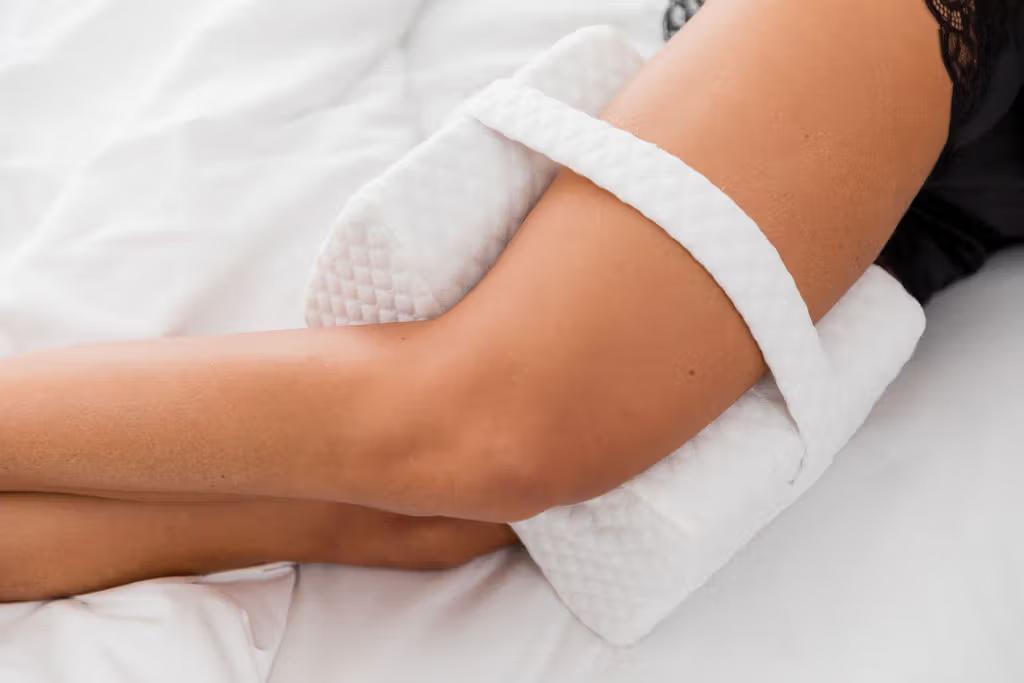
A standard pillow may be enough, or you can use a contoured knee pillow such as the Groove Combination Knee Pillow as an optional alternative.
A pillow may support the upper leg and improve positional comfort for some sleepers, but it hasn't been shown to treat GTPS or accelerate healing
How To Sleep Comfortably With Hip Bursitis
GTPS commonly disrupts sleep because lying positions can compress sensitive tissues around the greater trochanter.
Here are some practical ways to make sleeping more comfortable.
1. Experiment With Your Sleeping Position
Try back sleeping with a pillow beneath the knees and calves.
If this isn't comfortable, try sleeping on the less painful side with adequate support beneath or between the legs.
Avoid lying directly on the symptomatic hip during a flare where possible, and don't force yourself to remain in a position that increases pain.
2. Find a Comfortable Mattress and Bedding Setup
There isn't a particular mattress firmness that's been proven best for GTPS.
Instead, choose a sleep surface that feels supportive without creating painful pressure over the outside of your hip. An excessively soft or firm mattress may aggravate symptoms for some people, so individual comfort should guide your choice.
Replacing your mattress isn't routinely required simply because you have GTPS.
3. Support Your Legs With a Pillow
Supporting your upper leg is a simple, low-risk comfort measure that can be tried alongside appropriate treatment.
When side sleeping, a pillow between the thighs and knees can help prevent the upper leg from dropping inwards across the body, potentially reducing compression across sensitive lateral-hip tissues.
An ordinary pillow of suitable thickness may be sufficient. Alternatively, a contoured pillow such as the Groove Knee Pillow can be used if you find its shape more convenient.
The straps are designed to help keep the pillow in position during sleep, but sustained pain relief can't be guaranteed.
Stop using or reposition any pillow if it increases pain, numbness, skin pressure or sleep disruption.
4. Apply Heat or Cold Therapy
Heat or cold may provide temporary symptom relief before bed.
A cold pack may help with pain, while some people find warmth more comfortable for surrounding muscle tension. There's no need to routinely alternate between the two. Use whichever feels more comfortable.
Wrap cold packs rather than applying them directly to the skin and use them for short periods. Take extra care if you have reduced skin sensation or circulation.
5. Be Careful With Pre-Sleep Stretching
Generic stretching isn't necessarily helpful for GTPS.
Some deep gluteal or iliotibial-band stretches bring the affected leg across the body and can actually increase compression around the gluteal tendons.
Avoid stretches that reproduce your outer-hip pain or pull the affected leg significantly across the body. If you're unsure which exercises are appropriate, use exercises provided by a registered physiotherapist or reputable clinical service.
6. Focus on Gradual Strengthening
Exercise can play an important role in managing persistent GTPS, but the focus should generally be on gradually building the capacity of the hip muscles rather than simply stretching them.
A graded strengthening programme may improve function and reduce the risk of symptoms recurring, although flare-ups can't always be prevented.
Physiotherapist-led education, load management and exercise have good evidence behind them for gluteal tendinopathy (BMJ).
7. Identify and Modify Aggravating Activities
GTPS is multifactorial. It may be associated with changes in activity levels, repetitive loading, direct trauma, reduced hip capacity or other lower-limb and spinal conditions.
Activities such as running, hill walking, stairs or prolonged single-leg loading can aggravate symptoms in some people.
Rather than stopping activity completely, temporarily reduce activities that noticeably aggravate your hip and remain as active as your symptoms allow.
Why Is Hip Bursitis So Much Worse At Night?
Night pain with GTPS is more likely to be related to sustained compression and prolonged positioning than inflammation simply becoming worse at night.
Sleeping directly on the painful hip compresses sensitive tissues around the greater trochanter.
Even when sleeping on the opposite side, allowing the upper leg to fall across the body can increase hip adduction and compression around the affected tissues. Supporting that leg can therefore make the position more comfortable.
Daytime symptoms can behave differently depending on your activity and how much load is being placed through the hip.
This is also true with shoulder bursitis.

How Long Does Hip Bursitis Last?
Recovery varies considerably.
Some episodes settle within weeks, while persistent GTPS, particularly when gluteal tendinopathy is involved, may require several months of progressive rehabilitation.
Rather than relying on complete rest, temporarily reduce aggravating activities while remaining as active as symptoms allow.
If symptoms aren't improving or are repeatedly returning, a physiotherapist or other healthcare professional can help identify the underlying cause and develop an appropriate rehabilitation programme.
Hip Bursitis Symptoms & Treatments
Common symptoms of GTPS can include:
- Pain or tenderness over the outside of the hip
- Pain when lying on the affected side
- Pain during walking, running or climbing stairs
- Discomfort when standing on one leg
- Pain that may travel down the outside of the thigh
Some people report stiffness, but marked restriction of hip movement warrants assessment because other conditions, including hip osteoarthritis, can cause similar symptoms.
Not all pain around the outside of the hip is GTPS. Similar symptoms can also occur with gluteal tendon tears, hip osteoarthritis, referred lower-back pain, nerve problems, inflammatory conditions and, less commonly, fractures or other serious conditions.
GTPS is usually diagnosed based on your symptoms and a physical examination. Imaging isn't routinely required but may be appropriate if the diagnosis is uncertain or symptoms persist.
Management may include activity modification, education, progressive strengthening and short-term pain relief where medically appropriate. Speak to a pharmacist or clinician before using anti-inflammatory medicines, particularly if you have other medical conditions or take other medication.
Physiotherapy can provide diagnosis-specific load-management and strengthening advice, particularly when symptoms persist.
When To Seek Medical Advice
Arrange an assessment with a GP, physiotherapist or other qualified clinician if your hip pain affects sleep or everyday activities, keeps returning, is getting worse or isn't improving after around two weeks of reasonable self-care.
You should also seek assessment if you develop a persistent limp, significant restriction of movement, or pain accompanied by numbness or weakness.
Seek urgent medical care if:
- Severe hip pain starts suddenly without an obvious explanation
- Your hip becomes hot, swollen, red or discoloured
- You have hip pain alongside fever, chills or feeling generally unwell
- Pain follows a significant fall or injury
Seek emergency care after an injury if you cannot stand or bear weight, your leg looks shortened or deformed, or you have severe uncontrolled pain.
New bladder or bowel problems, numbness around the groin or progressive leg weakness also require emergency assessment (NHS).
Persistent unexplained night pain, particularly alongside unexplained weight loss, fever, previous cancer or systemic illness, should also be medically assessed rather than assumed to be bursitis.
Last Thoughts
Hip bursitis or GTPS can make sleeping uncomfortable, particularly when pressure is placed directly over the outside of the hip.
Changing your sleeping position and supporting the legs may improve comfort, but pillows don't treat the underlying condition or guarantee pain relief. Education, appropriate load management and progressive strengthening are more important for longer-term management.
If you sleep on the less painful side, supporting the upper leg with a pillow may prevent it from dropping across the body and compressing sensitive tissues. A standard pillow may be sufficient, while a contoured knee pillow is an optional alternative.
If you'd prefer a dedicated knee pillow, learn more about Groove’s knee pillow and how it can be used to support your legs during sleep.
References
- NHS Inform. Greater trochanteric pain syndrome.
- NHS. Hip pain in adults.
- Cambridge University Hospitals. Gluteal tendinopathy.
- Mellor et al. BMJ (2018). Education plus exercise versus corticosteroid injection versus wait and see for gluteal tendinopathy.
- American Family Physician. Management of Chronic Tendon Injuries.