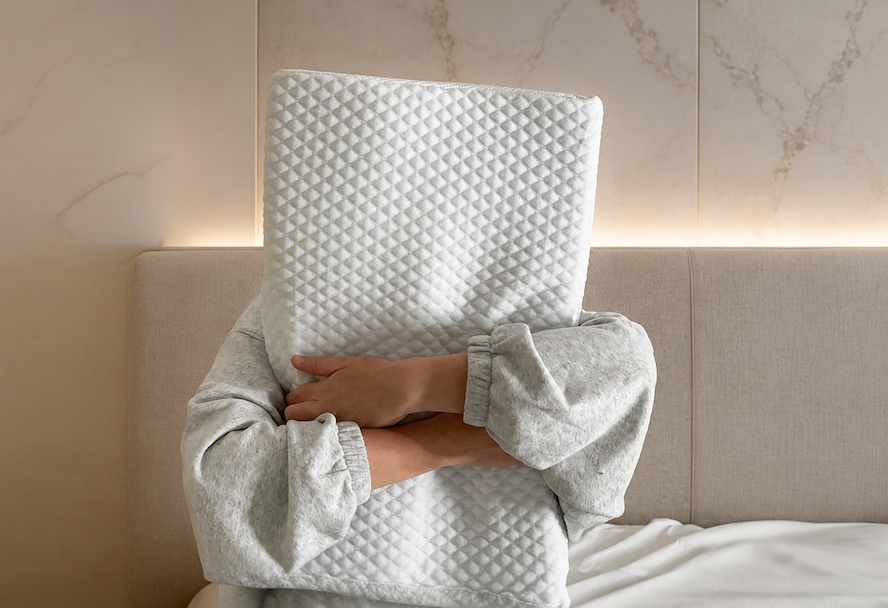
A dislocated shoulder can make even the smallest movements painful, and it’s common to go to bed worried about rolling onto it or waking up in more pain than you started with.
During recovery, sleep can feel unpredictable, especially if you’re unsure how to position yourself safely. The right sleeping position and supportive setup can make a significant difference to comfort and stability overnight.
This article explores how to sleep with a dislocated shoulder, from proper sleeping positions to pillow support.
Best Sleeping Positions For A Dislocated Shoulder
Finding a position that reduces pressure on the dislocated shoulder while keeping the joint stable is key during recovery, as this reduces the risk of re-injury (Paterson et al., 2010). The goal is to avoid strain, limit movement, and support the arm and upper body as much as possible.
Wondering “What is the best position to sleep in with a dislocated shoulder?” Here are three sleeping positions for dislocated shoulders.
Sleeping on Your Back
For many people, back sleeping is the most comfortable position in the early stages of recovery.
When back sleeping, you should:
- Keeps the shoulder in a neutral position
- Reduces the risk of rolling onto the injured side
- Helps distribute body weight more evenly
Supporting both arms can also help reduce tension around the shoulder joint, and specialised pillow support is extremely helpful here.
Placing the injured arm on the Groove Combination Pillow can help keep it slightly elevated and supported, and you may also find tailored support using a Groove Adjustable Pillow to reduce strain and encourage a more relaxed position throughout the night.

Sleeping on the Unaffected Side
Some people find side sleeping more comfortable with a dislocated shoulder, especially if back sleeping feels unfamiliar.
Tips for dislocated shoulder side sleeping:
- Lie on the non-injured shoulder
- Keep the injured arm supported in front of the body
- Use pillows to prevent rolling onto the affected side
Hugging a full-length pillow or a Groove Body Pillow can help stabilise the upper arm and stop it from drifting into positions that place strain on the shoulder.
This can also help maintain a more secure, cushioned sleeping posture in general, leading to better sleep quality and less fatigue.
Sleeping Slightly Reclined
A slightly elevated position can offer temporary relief during the early stages of dislocated shoulder recovery.
Sleeping reclined is popular due to three reasons:
- Reduces pressure on the shoulder joint
- Makes it easier to maintain a stable position
- Can feel more comfortable if lying flat increases discomfort
For better support and comfort, using layered pillows or an adjustable pillow setup can help create a gentle incline that supports both the upper body and the injured shoulder.
Sleeping With A Body Pillow To Help Dislocated Shoulder
A body pillow (full-length pillow) can be especially useful for stabilising sleep position overnight.
These pillows help create structure, remove excess pressure from your body, improve spinal alignment, and reduce unconscious movement during sleep.
A body pillow may also help a dislocated shoulder by:
- Reducing twisting of the upper body
- Supporting the injured arm in a stable position
- Preventing rolling onto the affected shoulder
- Providing full-body alignment support for side sleepers
The Groove Body Pillow is made from memory foam material that can help keep you in a safe position throughout the night, especially for those who naturally move in their sleep.

How To Avoid Dislocating Your Shoulder While Sleeping
One of the biggest concerns during dislocated shoulder recovery is accidentally moving into a position that increases strain on the shoulder. Creating a supportive sleep setup that maintains a stable position can help reduce this risk (Scheibel et al., 2009).
You can avoid dislocating your shoulder while sleeping by:
- Avoid sleeping on the injured side
- Keep the arm supported rather than hanging freely
- Use pillows to limit rolling during the night
- Avoid sleeping with the arm positioned overhead
- Maintain a comfortable, neutral spinal alignment
- Create a stable, well-supported sleep environment
Knowing how to avoid dislocating shoulder while sleeping is key to preventing re-injury. Generally, the aim here is to minimise uncontrolled movement and keep the shoulder as relaxed and supported as possible while resting, including when asleep, as this is key for recovery (Smith, 2006).
Can I Sleep Without A Sling After A Shoulder Dislocation?
Whether or not you need to sleep with a sling for a dislocated shoulder depends on your individual recovery plan. Advice can vary based on the severity of the injury and the stage of healing. It can also be affected by the treatment approach.
In many cases, healthcare professionals will advise on whether sling use is necessary during sleep, particularly in the early stages of recovery.
Because every injury is different, it’s important to follow personalised medical guidance rather than making changes independently. If in doubt, it’s best to contact a healthcare professional for a personal assessment.
Last Thoughts
Sleeping with a dislocated shoulder is all about reducing pressure and creating a stable and supported position for recovery that minimises overnight movement. With the right setup, it becomes easier to rest without worrying about the injured joint rolling or straining.
Sleep aids are a large part of dislocated shoulder support, and there are many to choose from. The Groove Adjustable and Combination Pillows can help support back sleeping positions, while the Groove Body Pillow adds stability for side sleepers who need extra control and comfort overnight.
Explore options today to create a secure, comfortable sleep environment while your shoulder heals.
References
-
Paterson, W.H., Throckmorton, T.W., Koester, M., Azar, F.M. and Kuhn, J.E. (2010). Position and Duration of Immobilization After Primary Anterior Shoulder Dislocation. The Journal of Bone and Joint Surgery-American Volume, 92(18), pp.2924–2933. doi:https://doi.org/10.2106/jbjs.j.00631.
-
Scheibel, M., Kuke, A., Nikulka, C., Magosch, P., Ziesler, O. and Schroeder, R.J. (2009). How Long Should Acute Anterior Dislocations of the Shoulder be Immobilized in External Rotation? The American Journal of Sports Medicine, 37(7), pp.1309–1316. doi:https://doi.org/10.1177/0363546509331943.
-
Smith, T.O. (2006). Immobilisation following traumatic anterior glenohumeral joint dislocation. Injury, 37(3), pp.228–237. doi:https://doi.org/10.1016/j.injury.2005.06.005.