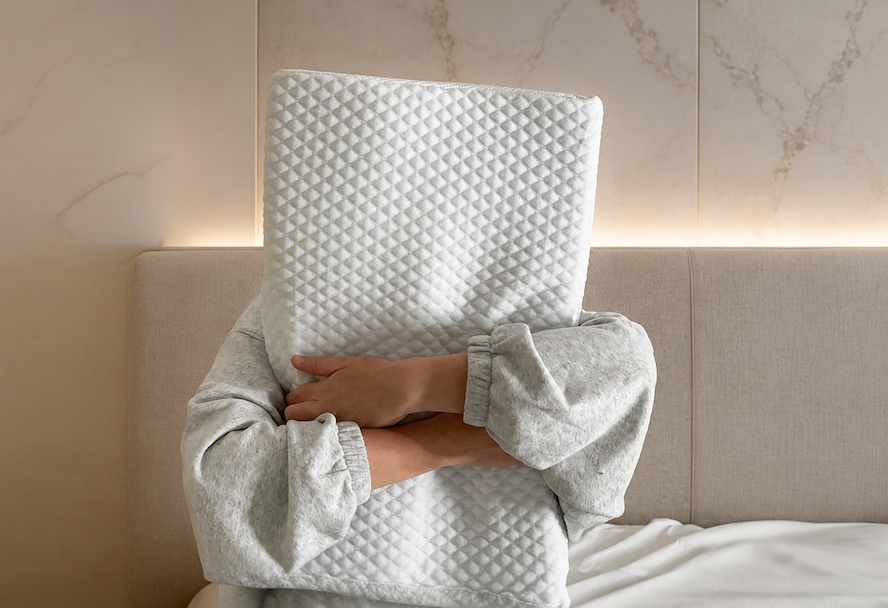
A blocked ear can make it hard to get comfortable at night, especially when congestion, fluid build-up or irritation feels more noticeable as you lie down.
Many people find that fullness, muffled hearing, or pressure feels worse once they get into bed, making it harder to fall and stay asleep comfortably. Understanding how to position your head properly can make a real difference to sleep quality while your ear recovers.
Here’s everything you need to know about how to sleep with a blocked ear.
Why Blocked Ears Often Feel Worse At Night
Blocked ears often feel more noticeable at night, especially when you're lying down and trying to rest. This is because middle ear pressure changes during sleep and can lead to pain if blocked (Tideholm, 1999).
Also, with fewer distractions, even mild pressure can feel more intense and harder to ignore when sleeping with blocked ear, whether from congestion or an infection.
Some reasons behind this include:
- Changes in head position can affect how pressure and fluid are felt in the ear
- Sinus congestion or a cold may feel worse when lying flat
- Reduced distractions make sensations more noticeable (e.g., fullness)
These little changes in the body’s position and environment can make symptoms feel more pronounced just as you're trying to fall asleep.
Should You Sleep On The Affected Ear Or The Opposite Side?
No you should not sleep on the affected side.
In many cases, side sleeping on the affected ear can increase pressure and worsen discomfort, particularly if the area feels sensitive or inflamed. The weight of your head may intensify the sensation of fullness, leading to more discomfort and potentially worse-quality sleep.
Also, it’s important to note that pressure can fluctuate throughout the night, meaning it may feel worse at points for seemingly no reason at all. This is especially true in the supine (back sleeping) position (Aksel Grøntved et al., 1989).
Sleeping on the opposite side is often more comfortable and widely considered the best sleeping position for blocked ear problems. This is because it can reduce pressure on the blocked ear. Depending on the cause, such as congestion or fluid build-up, this position may also support more natural drainage — however, this is not guaranteed.
Sleep comfort can vary from person to person, so it’s important to find a position that relieves your specific symptoms.
A specialised pillow can help when finding a proper sleeping position, especially if you’re not used to sleeping on the non-affected side. An adjustable pillow can help you adapt with support tailored to your body.

How Your Pillow Can Affect Ear Pressure
Your pillow plays an important role in how your head and neck are positioned throughout the night, and therefore, it also makes a significant difference when working out how to sleep with a clogged ear or an ear infection.
If your pillow is too flat or lacks support, it can affect alignment and increase the likelihood of rolling into uncomfortable positions, such as those that put excess pressure on your affected ear.
You may also end up with neck or back pain if you sleep with a twisted spine. So, it’s always important to consider your pillow setup.
A poorly supported pillow may:
- Increase pressure around the neck and jaw area
- Encourage movement onto the affected ear during sleep
- Create awkward head and shoulder alignment
- Cause you to wake up during the night
Ergonomic pillows and sleep aides made from memory foam can help, as they offer proper support.
The Groove Adjustable Pillow allows you to customise height and firmness by adjusting its internal memory foam panels. This makes it easier to find a supportive position that reduces pressure on the ear and keeps your head comfortably aligned throughout the night — with less risk of rolling over and onto the infected or blocked ear.
How To Sleep With A Clogged Ear
Finding a comfortable position can make a big difference when dealing with a clogged or blocked ear.
Here are five tips to try out:
- Sleep on the unaffected side where possible
- Keep your head slightly elevated to reduce pressure
- Avoid direct pressure on the blocked ear
- Support your neck with a pillow that maintains alignment
- Minimise unnecessary movement during the night
Pro Tip: Remember that the goal is to reduce pressure on the affected side while keeping your head and neck supported.
Again, a specialised sleep aid or pillow such as the Groove Adjustable Pillow can help you fine-tune your sleeping position, allowing you to adjust elevation and support until you find what feels most comfortable. You can even pair this with a memory foam mattress for full-body support.
Other Ways To Improve Sleep While Dealing With An Ear Infection
Alongside sleep positioning, a few simple adjustments to your environment and routine may help improve comfort at night. These you can experiment with and use what feels right for you.
- Keep bedroom air comfortably humid to reduce dryness
- Manage allergies that may contribute to congestion
- Reduce nasal or sinus congestion before bed (where possible)
- Ensure your head and neck are properly supported
- Avoid pressure directly on the affected ear while resting
These changes, combined with a supportive pillow setup and healthy sleep posture, can help create a more comfortable sleep environment while the ear’s symptoms improve.
Many people search for how to unblock ear while sleeping, but in reality, sleep can’t instantly clear a blockage, though the right position may help ease pressure and improve comfort overnight.

When To Seek Medical Advice
If the blocked ear symptoms persist or worsen, it’s important to seek advice from a healthcare professional.
This is especially important if you experience severe pain, dizziness, fever, discharge, or noticeable hearing loss. You should reach out to a healthcare professional if the symptoms do not go away with painkillers or at-home care.
Last Thoughts
While a blocked ear can make sleep more difficult, small adjustments to your sleeping position and pillow setup can help reduce pressure and improve comfort. You’ll be back sleeping on the affected side, pain-free, in no time.
If you’d like to explore solutions today, consider the Groove Adjustable Pillow, which allows you to customise support and elevation, helping you find a more comfortable sleeping position while your ear recovers.
References
-
Aksel Grøntved, Krogh, H.-J., Christensen, P.-H., Jensen, P.O., Schousboe, H.H. and Hentzer, E. (1989). Monitoring Middle Ear Pressure by Tympanometry:A Study of Middle Ear Pressure Variation through Seven Hours. Acta Oto-Laryngologica, 108(1-2), pp.101–106. doi:https://doi.org/10.3109/00016488909107399.
-
Tideholm, B. (1999). Middle Ear Pressure: Effect of Body Position and Sleep. Acta Oto-Laryngologica, 119(8), pp.880–885. doi:https://doi.org/10.1080/00016489950180216.