

How To Fix Middle Back Pain While Sleeping On Your Side

Waking up with aching or stiffness in your middle back can quickly turn a good night’s sleep into a frustrating experience. If you sleep on your side, the issue is often less about whether you’re on your side and more about how your body is supported throughout the night.
Below, you’ll find everything you need to know if you’re experiencing middle back pain while sleeping on the side.
What Causes Middle Back Pain At Night?
Middle back (thoracic spine) pain during sleep is commonly linked to poor support and alignment. This part of your back allows movement of your body, supports your chest and abdomen, and protects your spine and ribs (Cleveland clinic, 2023).
When your spine isn’t in a neutral position, surrounding muscles and joints can become strained.
Some of the most common causes of mid back pain include:
- Poor spinal alignment due to an unsupportive pillow or mattress
- Unsupported shoulders, which can pull the upper back out of position
- Mismatch between mattress and pillow height, creating uneven pressure
Daily habits can also play a role. If you spend long hours sitting, slouching, or looking down at screens, that tension can carry into your sleep posture.
In most cases, this kind of discomfort is mechanical and improves with better positioning. However, if pain is persistent or unusual, worsening over time, or preventing you from carrying out normal activities, it may be worth getting checked.
Why Side Sleeping Can Trigger Mid Back Pain
Side sleeping is often recommended as a middle back pain sleeping position, but without proper support, it can acidentally place more stress on the mid-back.
Wondering ‘Why does my mid back hurt when I lay on my side?'
ere are some potential reasons why:
- Pressure on the ribs and thoracic spine can create soreness over time
- Shoulders collapsing inward may round the upper back and strain muscles
- Spinal twisting can occur when your hips and upper body aren’t aligned
Without the right setup, your body may subtly twist or sink during the night. This leads to stiffness and discomfort by morning.
Here, a memory foam pillow, like the Groove Adjustable pillow, can help you stay in position throughout the night to avoid extra pressure on your middle back.
Shop Groove Adjustable PillowBest Sleeping Position For Middle Back Pain
The key to reducing middle back pain is maintaining a neutral spine. This is where your head, neck, and back stay in a straight, supported line.
You can achieve a neutral spin by:
- Use the right pillow height (loft): Your pillow should fill the space between your head and the mattress so your neck stays aligned with your spine. An adjustable pillow can help you fine-tune the height and firmness to suit your body.
- Support the gap between your shoulder and mattress: Side sleepers often have a natural gap here. A pillow like ththat adapts to your shape helps prevent your upper body from tilting.
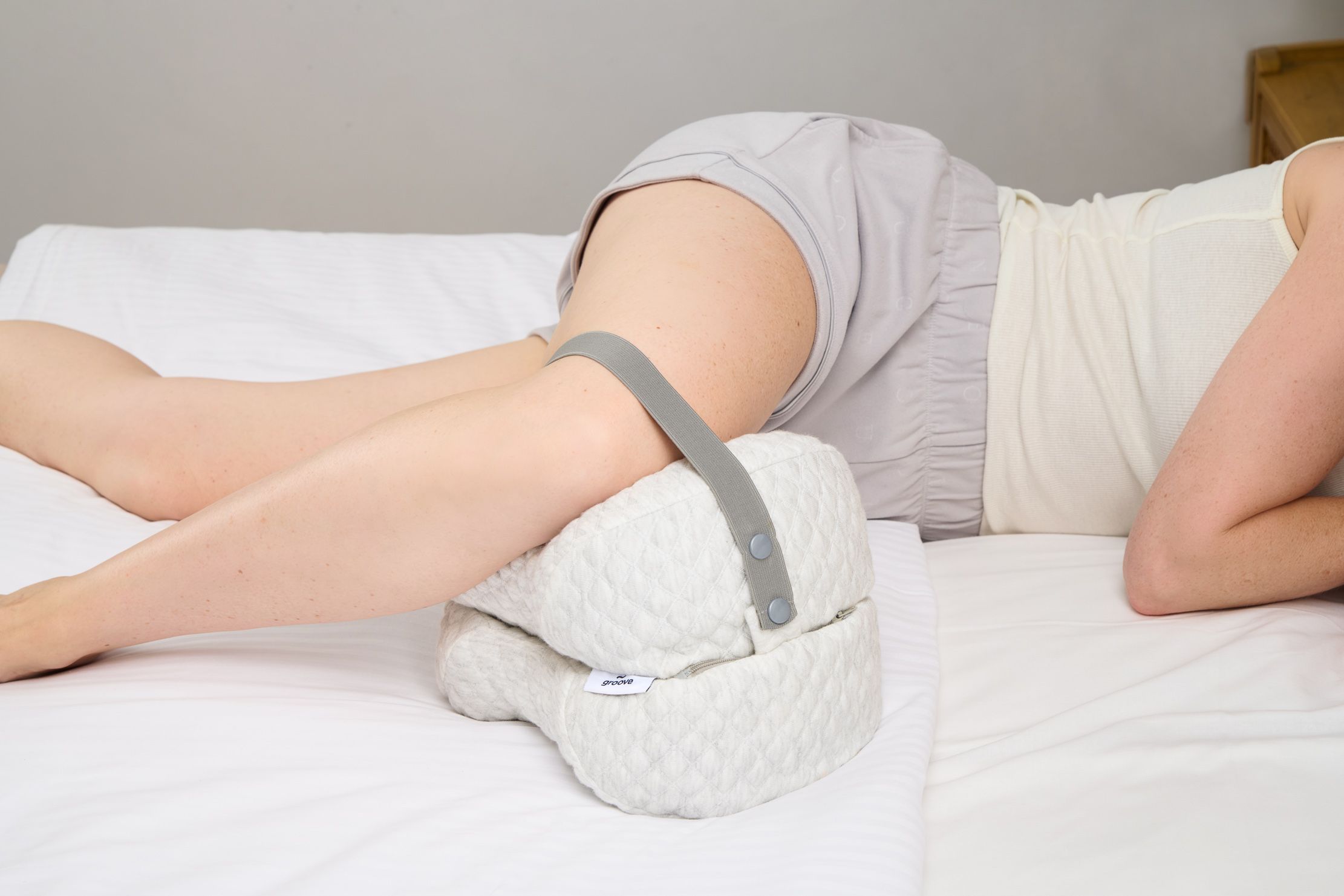
- Keep your shoulders stable: Supporting your arms with a second pillow (or a combination pillow design) can stop your shoulders from rolling forward and pulling your spine out of alignment.
- Prevent torso rotation: Hugging a second pillow or using a combination pillow can help keep your chest and hips stacked, reducing twisting through the spine.
For tailored support, options like the Adjustable Pillow and Combination Pillow are designed to help maintain alignment and reduce pressure points throughout the night.
What To Avoid When Sleeping With Middle Back Pain
Small habits can make a big difference. As well as making changes to address your back pain, try to avoid using a pillow that’s too low or too high, as this can tilt your neck and strain your spine.
Make sure you’re not sleeping in a twisted position or lying partially on your stomach, as these are the least supportive positions. Also, avoid letting your shoulders collapse forward without support, as this can worsen mid-back pain.
Even subtle misalignment, repeated over hours, can contribute to ongoing discomfort. When you’re awake, check in with your body every 30 minutes to an hour and take note of your posture. You may be in poor alignment more often than you realise!
When Is Middle Back Pain At Night A Red Flag?
Most middle back pain linked to sleep improves with better positioning. However, you should seek medical advice if you notice pain that doesn’t improve with position changes, or if it’s accompanied by symptoms such as fever, numbness, or tingling.
Unexplained weight loss alongside back pain is another sign to be aware of. These symptoms are less common but important to get checked.
Final Thoughts
Improving your sleep setup can make a noticeable difference to middle back pain, and you don’t even have to give up side sleeping.
Choosing a pillow that supports your alignment, such as an adjustable pillow or combination pillow, can help keep your spine neutral, your shoulders stable, and your body comfortable throughout the night!
Small changes in how you sleep can lead to better rest and a more comfortable morning. Explore the Groove Pillows now to begin the journey.
Explore All Groove PillowsReferences
- Cleveland clinic (2023). Thoracic Spine: What It Is, Function & Anatomy. [online] Cleveland Clinic. Available at: https://my.clevelandclinic.org/health/body/22460-thoracic-spine.