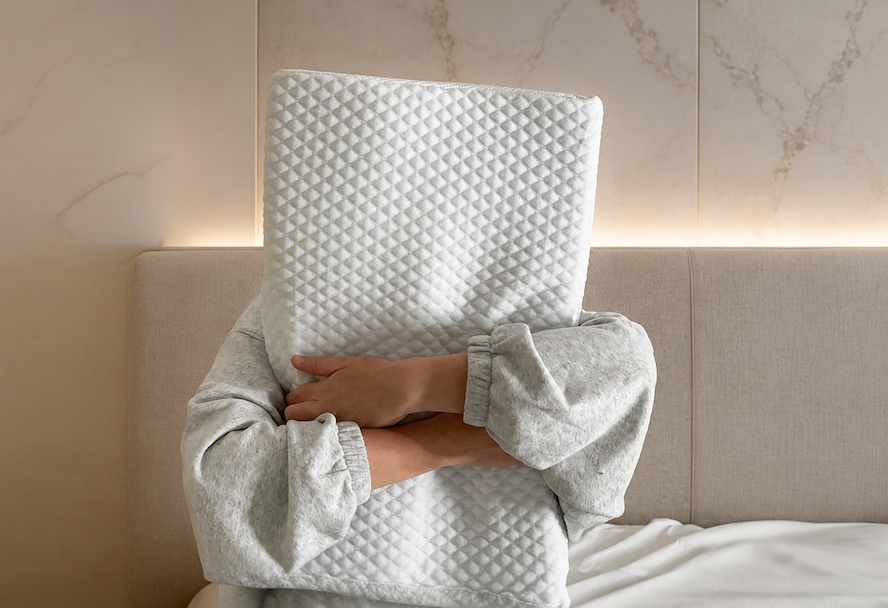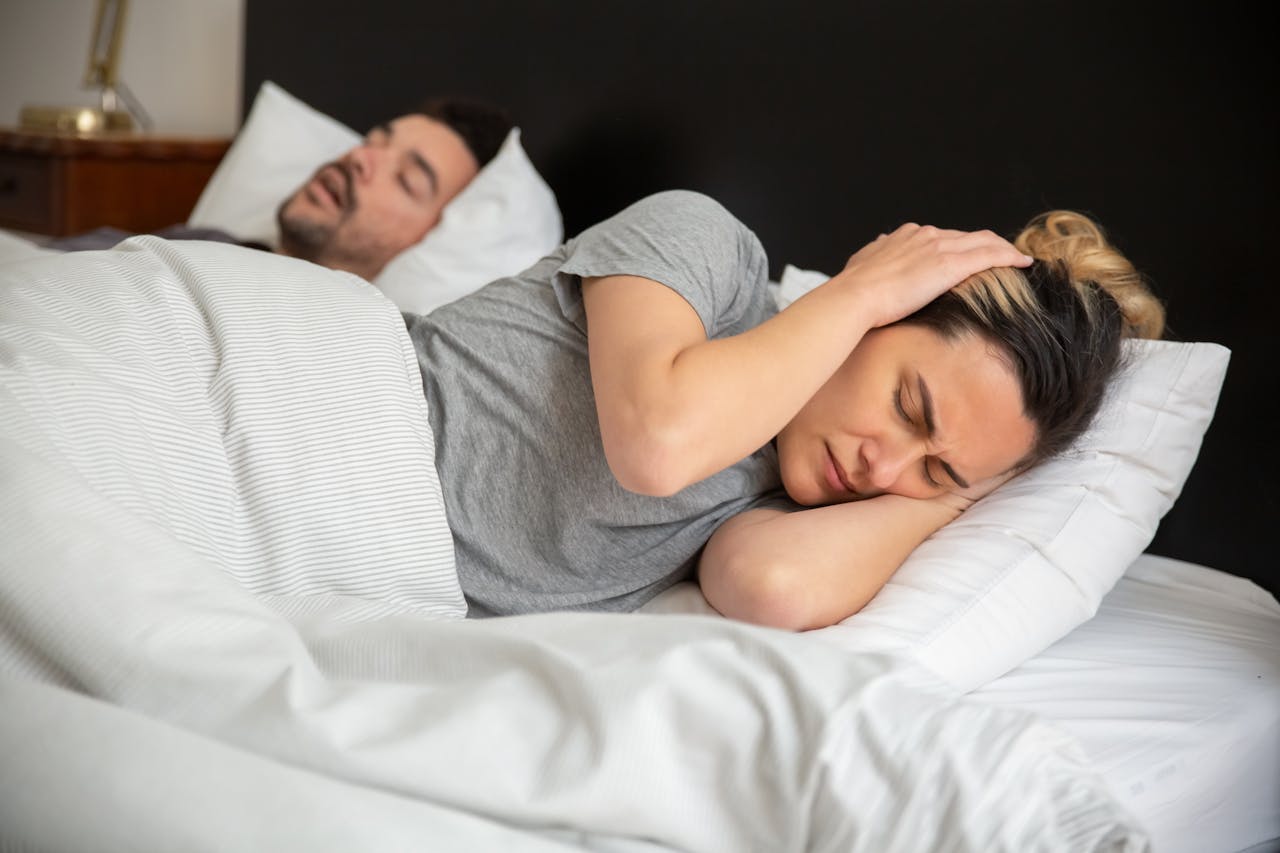
Laying awake at night listening to a loved one snore again? You’re not the only one.
Statistics show that around 20-40% of the population snore (Sowho et al., 2019), disrupting sleep for both the snorer and their partner.
While it is often seen as a minor nuisance, persistent snoring can contribute to daytime fatigue, poor concentration, stress levels, and even health issues over time.
Quiet nights can be achieved, though!
One simple but often overlooked tool is choosing the right anti-snore pillow setup and sleep positions to stop snoring, which can make a significant difference.
Here’s what you need to know before you shop.
Why Pillow Choice And Position Matter For Snoring
Many people rely on mouthpieces or nasal strips to manage snoring, but pillow choice and positioning are often more effective and underrated tools.
To understand why pillows matter more, we need to know what actually causes soring.
Snoring typically occurs when the airway narrows, especially when sleeping on your back or with poor head and neck alignment. A pillow that is too soft or low can allow the neck to tuck and the jaw to drop, restricting airflow.
Studies show that men tend to snore more than women, but both genders can be affected by the issue (Johns Hopkins Medicine, n.d).
Using two pillows (e.g., a supportive cervical pillow for the head and neck, and a leg or body pillow to maintain side-sleeping) can open the airway, improve alignment, and, thankfully, significantly reduce snoring.
What To Look for In A Pillow Setup To Reduce Snoring
Alongside finding the right head position to stop snoring, you need to make sure your pillow is tip-top quality. Here are four areas to consider.
1. Adjustable Cervical Head/Neck Pillow
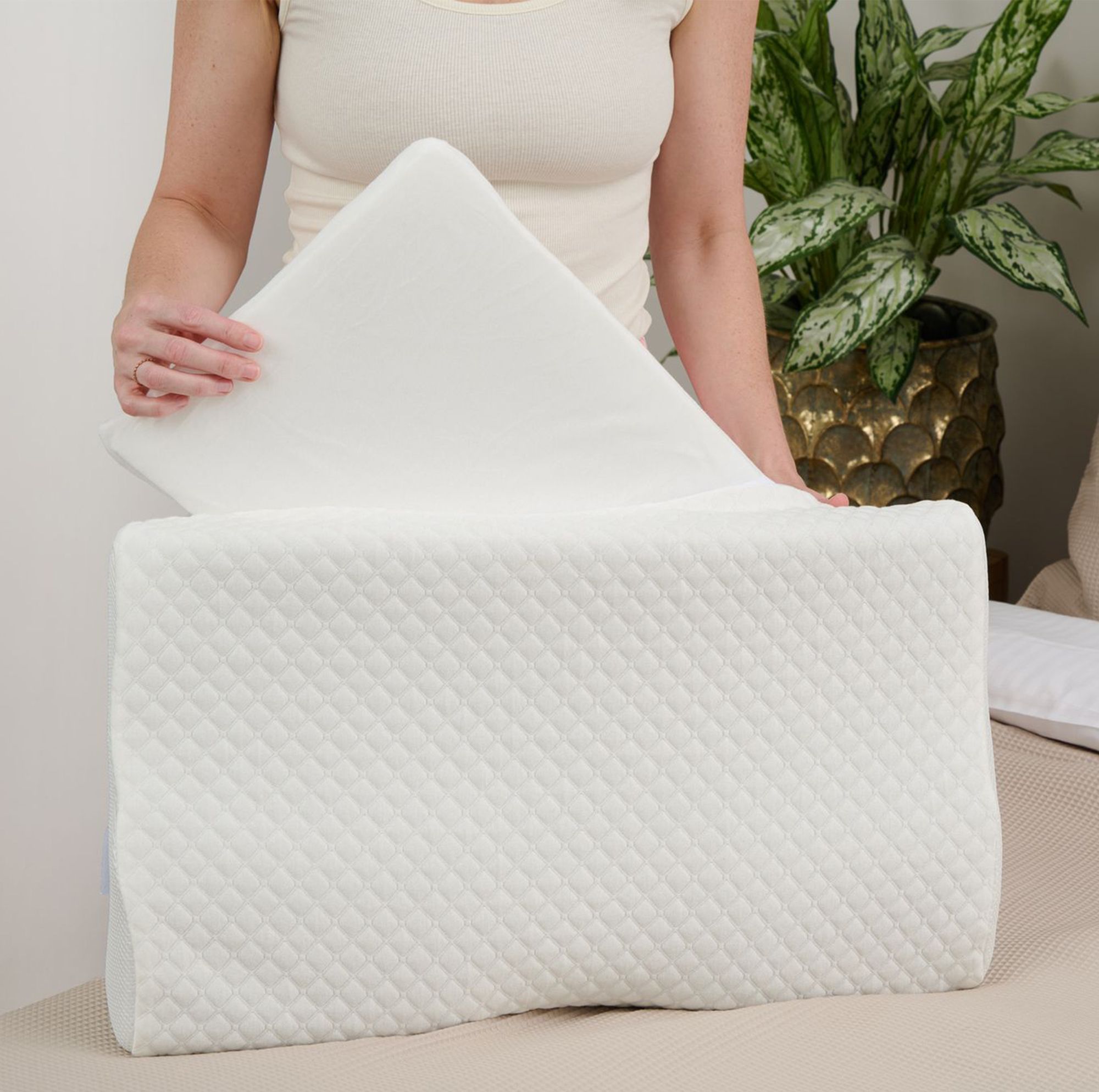
A pillow with adjustable layers or loft allows you to match its height to your shoulder width and preferred sleeping position.
It should be firm enough to maintain proper neck alignment, preventing chin-tuck or head tilt that can increase airway collapse.
Contoured pillows are particularly effective at supporting the neck while keeping the airway open, whether you sleep on your back or side.
The Groove Adjustable Pillow ticks these boxes and fits your body, no matter whether you’re petite, regular, or tall, thanks to removable panels.
2. Leg/Knee Support Or Positioning Pillow
Side sleeping is widely regarded as one of the best sleep positions to stop snoring, but many people roll onto their back unconsciously.
A knee or leg support pillow helps maintain the side-sleeping position, stabilising the hips and pelvis and keeping the shoulders and neck correctly aligned. Using lower body support promotes better upper body alignment, which can significantly improve airflow and even comfort overnight.
The Groove Combination Pillow comes with an adjustable strap to make sure you’re in position from dusk till dawn. Alternatively, you can hug the Groove Body Pillow for side sleeping support.
3. Head Elevation / Sleep Angle
Raising the head and upper torso can reduce airway collapse. However, elevation alone is not enough if neck alignment is poor.
Using an adjustable cervical pillow alongside gentle elevation ensures the airway remains open without straining the neck.
4. Sleep Position And Pillow Pairing
The most effective setup against pesky snoring combines side sleeping with the correct pillow support.
Here are a few tips for the best set up:
- Try a leg pillow or body pillow to stay on your side and keep your spine aligned.
- Choose a firm cervical pillow to support your head and neck.
- Skip soft pillows that let your head fall back or your chin drop.
- Elevate your head slightly and side-sleep for the best snoring reduction.

How To Set Up Your Pillows For Snoring Reduction (Step-by-Step)
Once you’ve got an ergonomic or memory foam pillow, it’s time to put it into action.
Believe it or not, there’s a right and wrong way to use a snoring pillow, so make sure you follow the five steps below to make the most out of your sleep set-up.
- Adjust your cervical pillow so your head and nose align with your sternum while side sleeping.
- Place the leg or knee support pillow between your knees to stabilise your lower body.
- If sleeping on your back is necessary, elevate your head slightly and ensure your neck is supported to prevent your chin from dropping backwards.
- Avoid sleeping flat on your back without proper support.
- Check your mattress. A mattress that is too soft can allow your hips and torso to sink, disrupting neck alignment even with the correct pillow setup.
When To Seek Medical Help
If snoring is accompanied by gasping pauses, choking, or excessive daytime sleepiness, it may indicate obstructive sleep apnoea (OSA). OSA can also make you feel very tired or cause mood swings and headaches in the day (NHS, 2022).
You should see a doctor if loud snoring persists despite adjusting pillows or your sleep position, or if you have significant nasal blockage or other airway issues.
In these cases, consulting a GP or sleep specialist is essential to identify underlying causes and ensure safe, effective treatment.
Final Words
Nothing’s more frustrating than a night of snoring, but luckily, pillow height and positioning can be simple yet effective ways to reduce the noise. The key is to experiment with different heights and set-ups to find the right solution for your body.
Explore the right pillow setup for your needs and make snoring a thing of the past.
See the Groove Adjustable Pillow now.
Shop Adjustable Memory Foam Pillow
References
- Johns Hopkins Medicine. (n.d.). Security Violation. [online] Available at: https://www.hopkinsmedicine.org/health/conditions-and-diseases/snoring.
- NHS (2022). Sleep Apnoea. [online] NHS. Available at: https://www.nhs.uk/conditions/sleep-apnoea/.
- Sowho, M., Sgambati, F., Guzman, M., Schneider, H. and Schwartz, A. (2019). Snoring: A Source of Noise Pollution and Sleep Apnea Predictor. Sleep. doi:https://doi.org/10.1093/sleep/zsz305.