Author, Hannah Thornley

Back pain and broken sleep often go hand in hand. The good news is that small adjustments in your positioning can make a meaningful difference to your comfort and sleep.
Here we share the best sleeping positions for back pain and ways to set your bed up to properly support your spine, so that you can get the night’s sleep you deserve.
Why Your Sleeping Position Matters
Your spine isn’t straight. It has three natural curves:
1. The lower back (lumbar spine) curves slightly inwards
2. The middle back (thoracic spine) curves outwards
3. The neck (cervical spine) curves inwards again
Pain in any of these areas is rarely caused by one single factor, and even the best sleeping position for back pain can’t cure it overnight. But how you support your spine does matter.
During sleep, your body remains in one position for hours at a time. If your head, shoulders or hips fall out of alignment, strain gradually builds. You’re more likely to have poor quality sleep or wake up with spinal tension (Cary et al, 2021).
Optimising your sleeping position helps reduce that prolonged pressure, allowing muscles to relax and joints to settle more comfortably.
How To Sleep With Lower Pain
Lower back pain is the most common type of back pain. It can make finding a comfortable sleeping position difficult, and choose the wrong once and you may wake up feeling even stiffer.
Stomach sleeping is best avoided. It flattens the natural curve of the lumbar spine and increases the risk of lower back pain. On the other hand, positions that support the natural shape of the spine help ease tension (Saini et al, 2025). Here are two of the best sleeping positions for lower back pain that you can try:
Ideal Sleeping Positions For Lower Back Pain
Back sleeping with knee support: If you like sleeping on your back, try placing a supportive pillow like the Groove Combination Pillow under your knees. This gently tilts the hips forwards, reducing pressure through the lower back and helping prevent excessive arching.
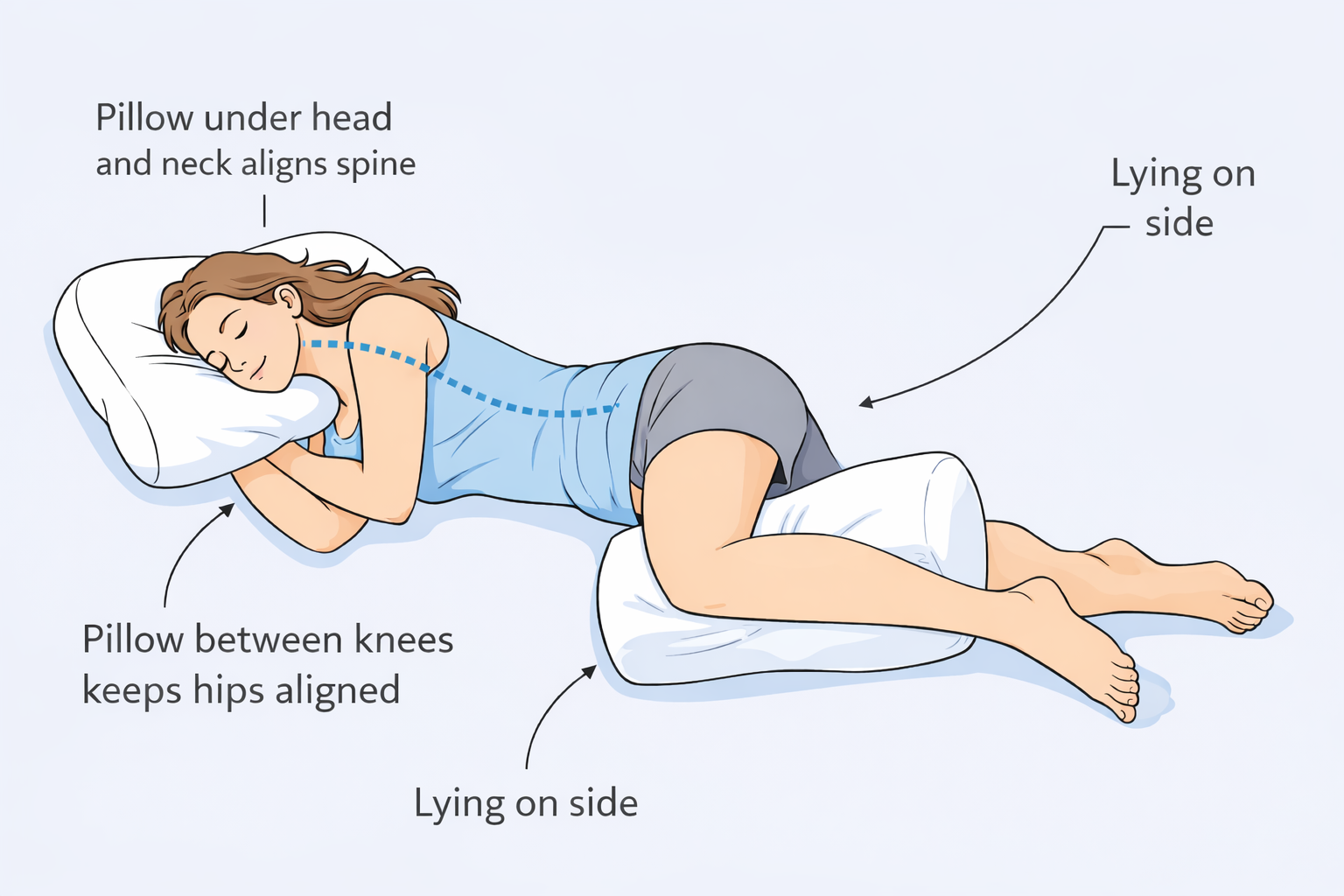
Side sleeping with a pillow between the knees: Many people with lower back pain prefer to sleep on their side (Ylinen et al, 2024). If you’re a side sleeper, place a pillow between the knees. This helps stop the top leg dropping forward and twisting the spine.
While sleeping position is key, don’t overlook your mattress if you have lower back pain. Mattresses that are too soft allow your hips to sink, pulling your spine out of alignment. Research suggests a medium-firm mattress often provides better support (Caggiari et al, 2021).
How To Sleep With Middle Back Pain
Middle back pain is the least common type of back pain, often caused by poor posture and long hours spent slouching or leaning forward. Correcting this posture while you sleep can make it easier to drift off, and you won’t wake up feeling so stiff.
All the best sleeping positions for middle back pain focus on maintaining space through the upper torso and avoiding rounding of the shoulders:
Ideal Sleeping Positions For Mid-Back Pain
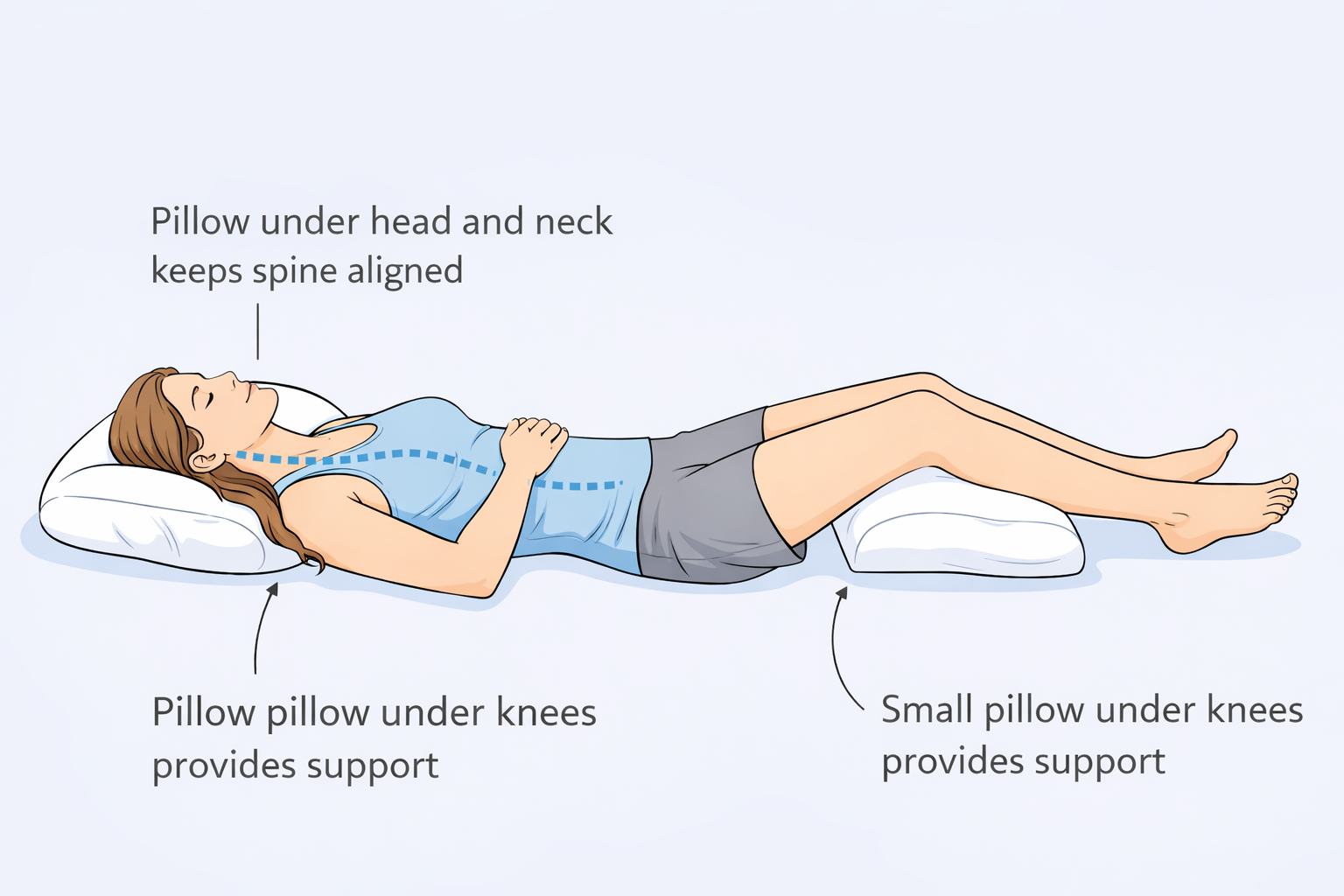
Back sleeping with gentle knee support: Sleeping on your back naturally allows the shoulders and chest to open, helping reduce arching and mid-back discomfort. Put a small pillow under your knees to support the lower spine and prevent your mid-back from flattening.
Side sleeping with a neutral spine: Side sleeping is an option if you have mid-back pain, but avoid curling into a rounded fetal position or twisting the upper hip or shoulder forward. Instead, try to keep your shoulders, hips, and knees stacked.
Using pillows while side sleeping can help you maintain a neutral spine throughout the night. Try placing a pillow between your knees to keep your pelvis square, or hug a body pillow to help keep your shoulders in a neutral position and stop the top shoulder collapsing forward.
How To Sleep With Upper Back Pain
Upper back pain is often linked to how the neck and shoulders align. It can be made worse at night by using the wrong height pillows that stop the neck from resting in its natural position, or sleeping with arms overhead, which compresses muscles that stabilise the shoulder joints.
The best sleeping positions for upper back pain focus on using pillows that support the neck and shoulders to reduce tension (Lei et al, 2021):
Best Sleeping Positions For Upper Back Pain
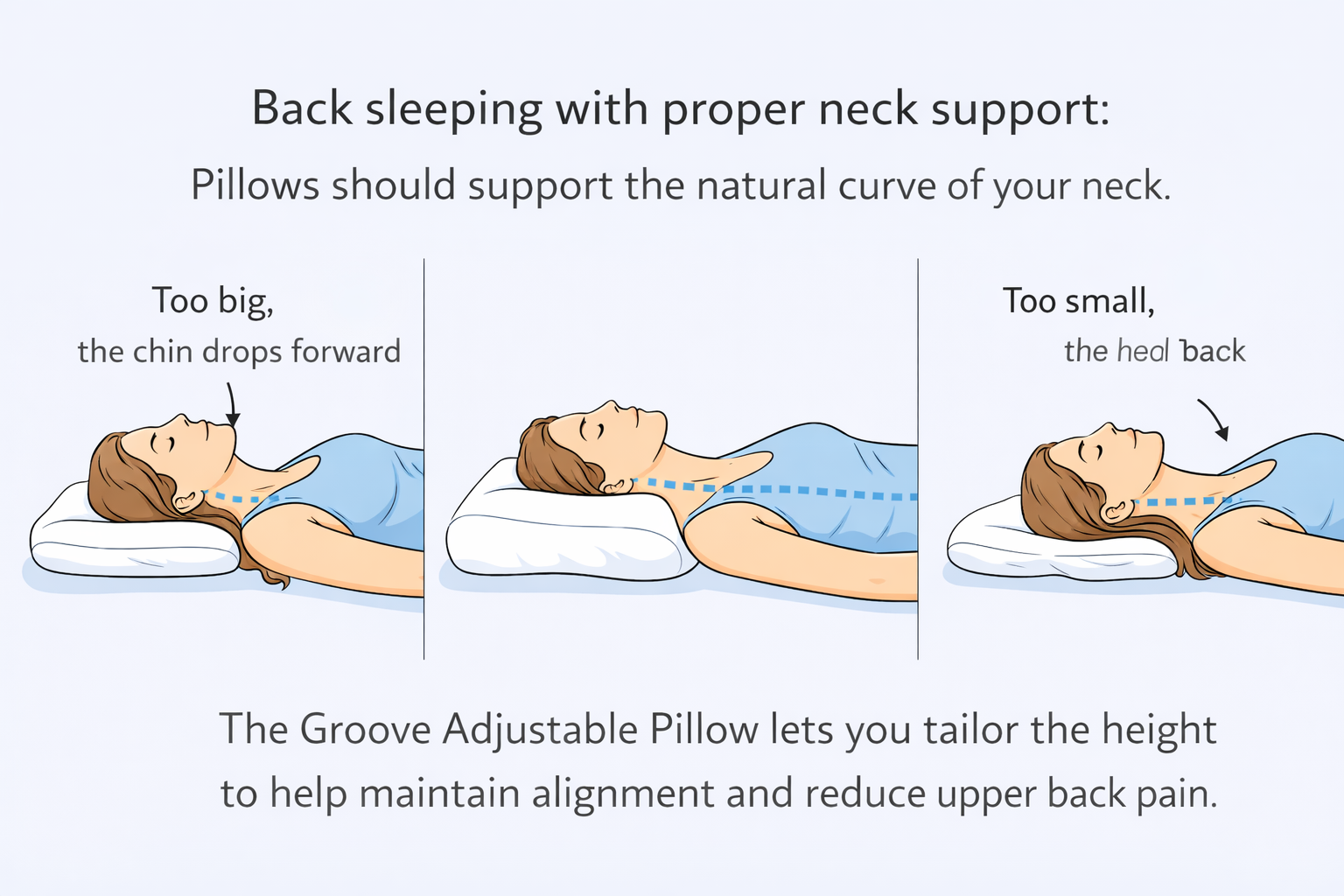
Back sleeping with proper neck support: Pillows should support the natural curve of your neck. Too big, the chin drops forward. Too small, the head tilts back. The Groove Adjustable Pillow lets you tailor the height to help maintain alignment and reduce upper back pain.
Side sleeping with the right pillow: For side sleepers, pillows should fill the space between the shoulder and head so the neck lies straight. Hugging a pillow also keeps the arms in front to reduce shoulder tension while stopping the chin from tucking or the head from tipping back.
If you are a stomach sleeper, bad news: this is the worst position for upper back pain. It forces the neck into rotation for hours at a time, increasing strain throughout the cervical spine.
How To Sleep More Comfortably With Back Pain
Whatever part of your back is hurting, sleeping in a position that supports the spine’s natural alignment will help reduce overnight strain. Make sure to choose a position that you find most comfortable and use pillows to improve alignment.
Here are some additional tips that can help sleep more comfortably:
- Choose a medium-firm mattress is is supportive and not overly soft
- Use the correct height pillows to support your neck – where adjustable pillows can be great.
- Before bed, consider applying heat to ease muscle tension or cold for inflammation
- Try gentle pre-sleep mobility stretches or yoga to help the muscles and joints relax
- Stay consistent with strengthening and core stability work
- Try to identify underlying causes (poor posture, inactivity, etc.) and address the issues
Why Is Back Pain Worse At Night?
Many people find back pain becomes more noticeable once they lie down, possibly due to:
- Reduced movement and circulation during prolonged overnight stillness
- Greater awareness of pain without daytime distractions
- Poor spinal support allowing gradual misalignment
- Inflammatory or mechanical issues becoming more apparent at rest
If pain is severe, progressively worsening, associated with neurological symptoms, unexplained weight loss or doesn’t improve with position changes, it’s important to seek medical advice.
Support Your Spine, Support Your Sleep
Sleeping position alone won’t cure back pain, but proper alignment helps prevent hours of unnecessary pressure building. And that often comes down to the right support.
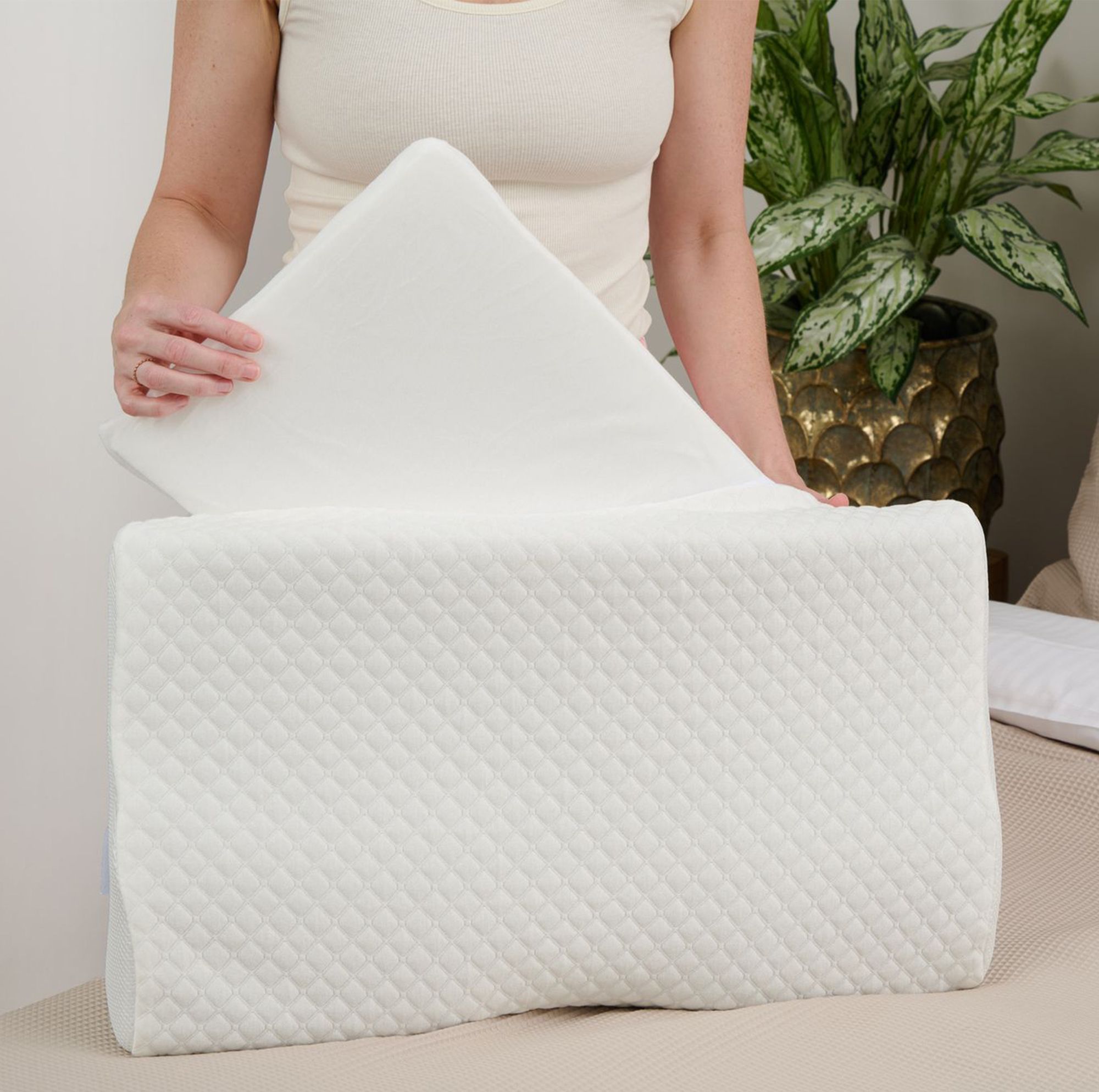
The Groove Adjustable Pillow helps maintain neutral head and neck alignment, while the Groove Combination Pillow supports the knees and hips, particularly useful for side sleepers managing lower or middle back pain.
They’re simple adjustments, but over a full night’s sleep, they can make a real difference.
Shop Adjustable Memory Foam Pillow
References
- Saini Y, Rai A, Sen S. (2025). Relationship Between Sleep Posture and Low Back Pain: A Systematic Review. Musculoskeletal Care [Online] 23(2):e70114. doi:https://doi.org/10.1002/msc.70114
- Cary D, Jacques A, Briffa K. (2021). Examining relationships between sleep posture, waking spinal symptoms and quality of sleep: A cross sectional study. PLoS ONE. [Online] 30;16(11):e0260582. doi:https://doi.org/10.1371/journal.pone.0260582
- Ylinen J, Arja Häkkinen, Hannu Kautiainen, Juhani Multanen. (2024) Preferences and Avoidance of Sleeping Positions Among Patients With Chronic Low Back Pain: A Cross-Sectional Study. Curēus. [Online] 6;16(5). doi:https://doi.org/10.7759/cureus.59772
- Caggiari G, Talesa GR, Toro G, Jannelli E, Monteleone G, Puddu L (2021). What type of mattress should be chosen to avoid back pain and improve sleep quality? Review of the literature. Journal of Orthopaedics and Traumatology [Online] 22(1). doi:https://doi.org/10.1186/s10195-021-00616-5
- Lei JX, Yang PF, Yang AL, Gong YF, Shang P, Yuan XC (2021). Ergonomic Consideration in Pillow Height Determinants and Evaluation. Healthcare. [Online] Oct 7;9(10):1333. doi:https://doi.org/10.3390/healthcare9101333