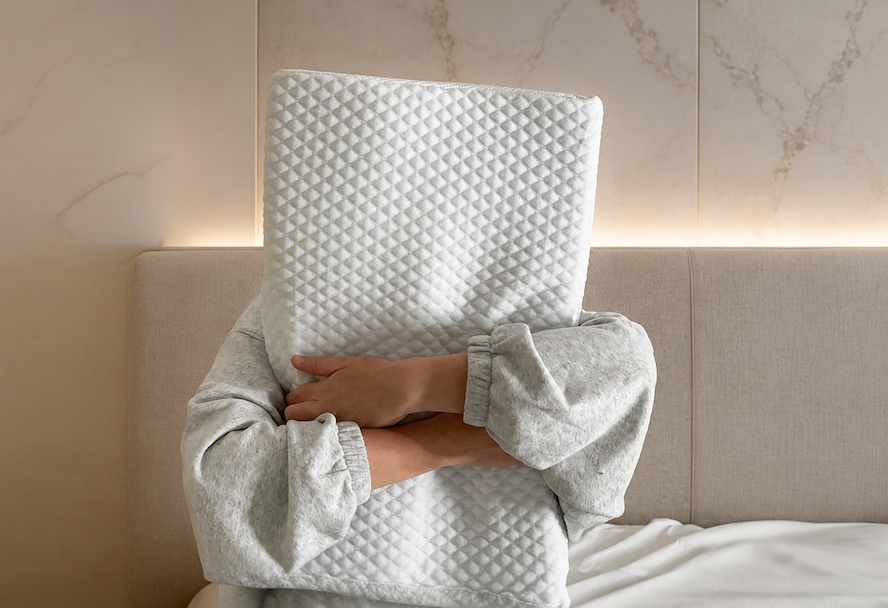
Cervical myelopathy occurs when the spinal cord becomes compressed in the neck, potentially causing a host of symptoms, including neck pain, stiffness, weakness, numbness or tingling.
These effects can make finding a comfortable sleeping position difficult, particularly when your neck is poorly supported overnight.
Below, Groove explores the best pillow for cervical myelopathy and how to create a comfortable set-up for your neck and body.
Why Neck Alignment Matters More Than Pillow Firmness
When choosing a pillow for cervical myelopathy, firmness is only part of the picture. Pillow height plays an important role in determining the position of your head and neck while you sleep, and it should not be overlooked.
Research using MRI has shown that the position of the neck can influence the amount of space available within the cervical spinal canal, highlighting the importance of avoiding prolonged, uncomfortable neck positions (Jha, Miyazaki and Tsumura, 2018).
For example, if your neck is bent too far forwards, backwards or sideways for several hours, this can place additional strain on the cervical spine and surrounding structures. Because of this, instead of simply choosing the firmest pillow available, focus on keeping your head, neck, and upper spine in a comfortable, neutral position. Spinal alignment is key here!
Choosing the Right Pillow Height
When asking what is the best pillow for cervical myelopathy, the answer depends largely on finding the right height for your body. There isn't one pillow height that works for everyone, as your ideal loft depends on factors such as shoulder width, body shape, mattress and preferred sleeping position.
- Back sleepers generally require a lower pillow to avoid pushing the head too far forwards.
- Side sleepers often need greater height to fill the space between the shoulder and head, preventing the neck from dropping sideways towards the mattress.
- Stomach sleeping is not recommended due to lack of support.
- A 2025 systematic review of 19 studies found that changes in neck position can reveal differences in spinal cord compression that aren't always apparent when the neck is neutral, with extension frequently showing increased compression or narrowing (Baram et al., 2025).
Finding a position that keeps your neck comfortably supported is therefore a sensible place to start.
The Groove Adjustable Pillow allows you to add or remove filling until you find a height that comfortably supports your neck. This adjustability can be particularly useful when you're trying to avoid excessive neck flexion or side bending.

The Best Sleeping Positions for Cervical Myelopathy
Knowing how to sleep with cervical myelopathy involves identifying your preferred sleeping position and following best-practice advice to protect your neck.
Back Sleeping
Sleeping on your back can make it easier to maintain a neutral cervical spine because your head and neck aren't rotated to either side.
Make sure your pillow supports the natural position of your neck without pushing your chin towards your chest.
Side Sleeping
Side sleeping can also be comfortable, provided your pillow is high enough to keep your head level with your spine.
If your head drops towards the mattress or is pushed upwards, your neck may remain bent for several hours.
Stomach Sleeping
Stomach sleeping is generally best avoided if you have cervical spine problems, as this position requires you to keep your head turned to one side for prolonged periods.
Supporting Your Upper Body While Side Sleeping
Your pillow isn't the only thing that influences neck and spinal alignment. If you're a side sleeper, as more than half of adults are, according to research (Moro, 2026), the position of your shoulders and upper body also matters.
A full-length body pillow can help in this case. Hugging a Groove Body Pillow can support your upper arm and help prevent your shoulders from rotating forward. This may make it easier to maintain a comfortable position through your shoulders, upper back and neck while reducing unnecessary twisting throughout the night.
Common Pillow Mistakes That Can Aggravate Neck Symptoms
If you regularly wake with a stiff or uncomfortable neck, but have chosen a recommended cervical myelopathy sleeping position, take a closer look at your pillow setup.
Common mistakes include:
- Using a pillow that's too high or using two pillows
- Sleeping on a pillow that's too flat
- Stacking multiple pillows to create extra height
- Sleeping on your stomach with your neck turned to one side
- Keeping your neck bent or rotated for long periods
Again, a pillow doesn't need to feel particularly firm to provide good support. What matters is whether it keeps your neck comfortably positioned while you sleep.

Creating a Neck-Friendly Sleep Setup
A supportive sleep setup can be created in a few steps. Generally speaking, the aim is to keep your neck, shoulders and upper body comfortably supported without forcing yourself into a position that feels unnatural.
- Adjust your pillow height until your head and neck feel neutral. Avoid tilting forwards, backwards or to one side.
- Keep your shoulders relaxed. Avoid positions that cause the shoulders to bunch up towards your ears.
- Support your upper body when side sleeping. The aim is to reduce twisting through your shoulders and upper spine.
- Avoid forcing your neck into uncomfortable positions. This is particularly important when staying in one position for long periods.
- Focus on comfort rather than a "perfect" posture. Choose a position that feels natural and supportive for your body.
What Our Groove Researcher Found
I've experienced first-hand how sleeping in an awkward position can leave you waking up with a stiff neck and uncomfortable symptoms extending into your arm. For me, adjusting my pillow height made a noticeable difference to overnight comfort, rather than simply switching to a firmer pillow.
Of course, that's my personal experience rather than medical advice. While a supportive pillow may help you sleep more comfortably, it cannot treat the spinal cord compression associated with cervical myelopathy.
If your symptoms persist or worsen, always speak to a medical professional and seek healthcare guidance.
Last Thoughts
If neck pain or cervical myelopathy symptoms are affecting your sleep, choosing a pillow that supports a neutral neck position can make sleeping more comfortable.
Start with the Groove Adjustable Pillow to find a pillow height suited to your sleeping position, or add the Groove Body Pillow for extra support when sleeping on your side.
References
- Baram, A., El Choueiri, J., Brembilla, C., Pellicanò, F., Rossi, L. De, Cosmo, L. Di, De Robertis, M., Stucchi, E., Creatura, D., Capo, G., Fornari, M., Riva, M., Politi, L.S. and Pessina, F. (2025). Dynamic MRI in Degenerative Cervical Myelopathy: A Systematic Review of Radiological Markers, Correlations, and Outcomes. Journal of Clinical Medicine, [online] 15(1), p.265. doi:10.3390/jcm15010265.
- Jha, S.C., Miyazaki, M. and Tsumura, H. (2018). Kinetic change of spinal cord compression on flexion-extension magnetic resonance imaging in cervical spine. Clinical neurology and neurosurgery, [online] 174, pp.86–91. doi:10.1016/j.clineuro.2018.09.017.
-
Moro, C. (2022). Do You Sleep on Your Back or Side? Here’s The Research on “Optimal” Sleep Positions. [online] ScienceAlert. Available at: https://www.sciencealert.com/do-you-sleep-on-your-back-or-side-heres-the-research-on-optimal-sleep-positions [Accessed 7 Aug. 2026].