
Calcific tendonitis can make sleep a real challenge, but you don’t need us to tell you that.
Studies suggest that shoulder pain is a major contributor to disrupted sleep. 35 to 45% of patients with calcific tendonitis develop shoulder pain, leaving them waking repeatedly or struggling to find a comfortable position (Kim et al., 2020).
If you’ve experienced shoulder pain at night, you’ll know how much it can affect rest and daily energy levels. Let’s look at how to sleep with calcific tendonitis and ways to manage the aches.
How Calcific Tendonitis Affects Sleep
With calcific tendonitis, calcium deposits accumulate in the tendon, leading to inflammation, pain, and sometimes reduced range of motion.
The pain often becomes worse in the evenings. At night, lying on your shoulder and rotator cuff or in awkward positions can worsen discomfort, while the wrong pillow can compress the tendon, causing symptoms to flare.
Pain often feels sharper when the body is at rest because the shoulder isn’t moving, so supporting the joint correctly becomes essential for a decent night’s sleep.
Calcific tendonitis is most common in the 40 to 60 year old age group, with women more likely to be affected than men. It’s most common in patients’ dominant shoulder, but can occur in both shoulders (Bureau, 2013).
How To Sleep with Calcific Tendonitis
1. Avoid Sleeping On The Affected Shoulder
Side sleeping is common, with an estimated 66% of us sleeping on our sides every night.
However, if the affected shoulder is underneath you, the tendon is compressed, making it more painful.
Try lying on your opposite side or on your back to reduce direct pressure. You can use a pillow for shoulder pain calcific tendonitis to help you stay in position. Which brings us to…
2. Choose A Supportive Cervical Pillow
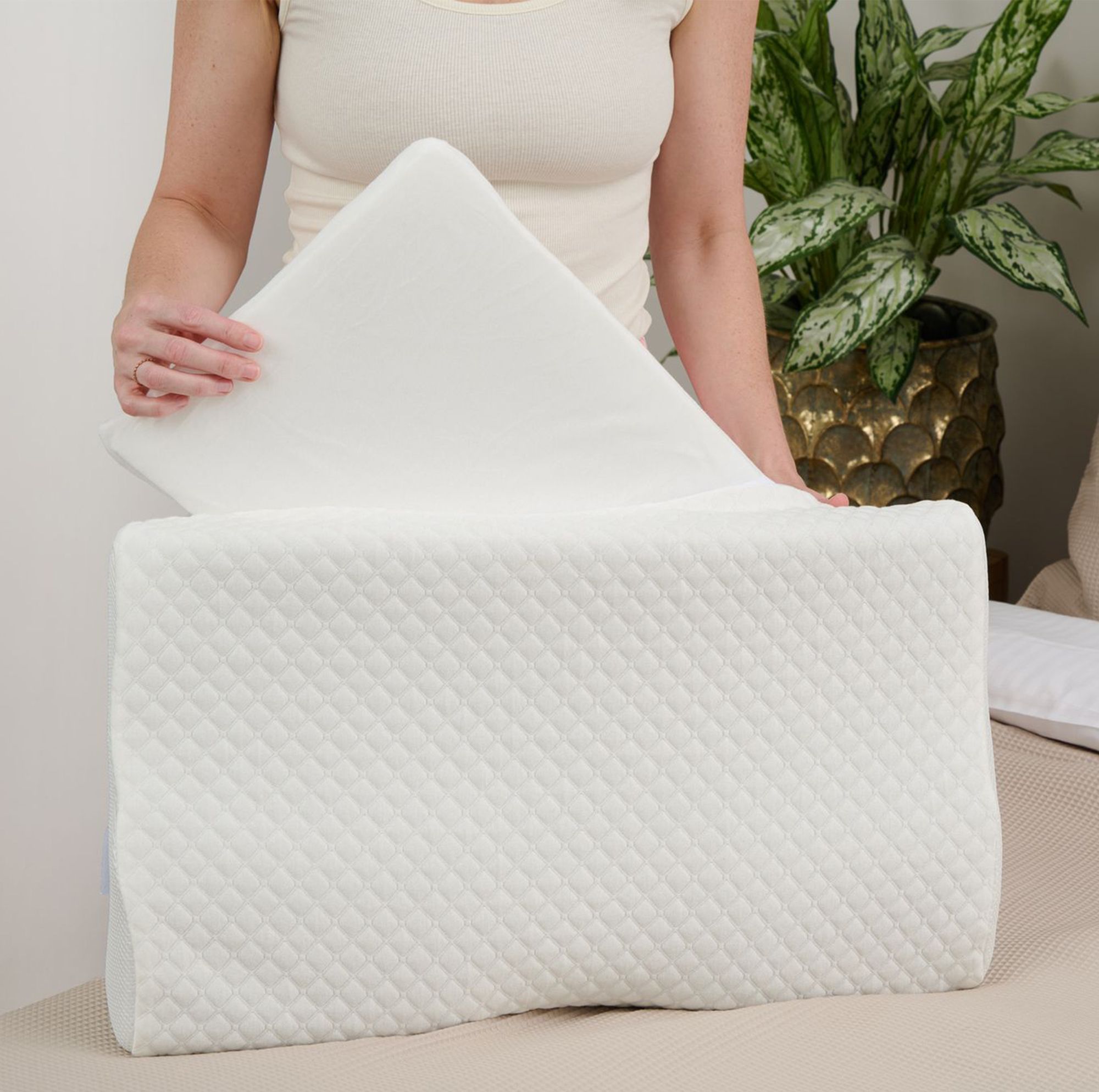
A firm, contoured cervical pillow can keep your neck and shoulders in a neutral position. This gives more support than a normal pillow.
The Groove Adjustable Pillow allows you to customise height and firmness, keeping the head aligned while reducing strain on the shoulder tendon. This makes it a practical option when looking for a calcific tendonitis sleep pillow that gives real support
3. Ensure Shoulder Clearance And Support
Your sleep positioning is key!
Place a small pillow or folded cushion under your arm or shoulder to prevent the shoulder from collapsing inward. This keeps the tendon free from compression and reduces nighttime irritation.
Using a knee pillow or a small bolster under the affected arm can further support alignment, especially if you tend to roll onto your shoulder during sleep.
The Groove Combination Pillow works as a small bolster and knee pillow, and it comes with an adjustable strap for all-night support.
4. Consider A Body Or Side Support Pillow
Hugging a body pillow can help keep the top arm supported, maintaining shoulder clearance throughout the night.
A long body pillow or side support pillow also ensures the arm doesn’t slump forward, which often aggravates tendon pain. These setups are especially useful for those needing guidance on sleeping with shoulder pain calcific tendonitis.
If you’re looking for a shoulder calcific tendonitis pillow support, the Groove Body Pillow is a good memory foam option.
The Groove Body Pillow is long, supportive, and designed to reduce joint strain, making it ideal if you’re looking for the best body pillow for hypermobility or even the best body pillow for Ehlers-Danlos Syndrome.
5. Mattress And Sleep Environment Setup
A supportive mattress is vital for shoulder alignment, and get this: it shouldn’t be too soft. This is because super-soft mattresses don’t provide enough support.
So, ensure your sleeping surface keeps your torso level, preventing your shoulders from dropping into uncomfortable angles. Adjust your bedding so heavy duvets don’t pull on your arm or shoulder.
A combination of a medium-firm mattress and proper pillow support can make a significant difference in comfort.
Lifestyle Tips For Calcific Tendonitis
Alongside a calcific tendonitis sleep pillow and positioning strategies, these simple lifestyle tips can help ease shoulder discomfort and support better sleep. A mix of both is always best!
- Gentle shoulder mobility exercises or stretches under physiotherapy guidance
- Apply ice to reduce inflammation or heat to ease stiffness before bed
- Maintain good sleep hygiene (e.g., a consistent bedtime, dark room, no phones or caffeine before bed)
- Avoid heavy duvets pulling on the shoulder
- Ensure a supportive mattress and pillow combination
Small changes and smart support can lead to better sleep, and mornings without aches and pains. Experiment, and see what works best for you regarding sleeping shoulder pain calcific tendonitis.
When To Seek Professional Help
If you notice ‘red flags’ such as severe or worsening pain, significant swelling, numbness, tingling, or reduced shoulder movement, or if symptoms don’t improve despite supportive sleep setups, it’s essential to consult a healthcare professional.
A GP, physiotherapist, or specialist familiar with calcific tendonitis can provide personalised strategies to combat the condition. These can include exercises, alongside other treatment options.
If you experience extreme pain that stops you from completing daily tasks, seek urgent medical attention.
Final Words
Sleeping with calcific tendonitis is difficult, but if you experiment with the advice on this page, you can achieve more restful sleep.
Try using an adjustable pillow shoulder tendonitis setup, combined with strategic positioning, supportive bedding, and gentle lifestyle adjustments, to reduce pain and protect the tendon while you rest.
Find shoulder relief today. See the Groove Adjustable Pillow here.
Shop Adjustable Memory Foam Pillow
References
- Bureau, N. (2013). Calcific Tendinopathy of the Shoulder. Seminars in Musculoskeletal Radiology, 17(01), pp.080–084. doi:https://doi.org/10.1055/s-0033-1333941.
- Kim, M.-S., Kim, I.-W., Lee, S. and Shin, S.-J. (2020). Diagnosis and treatment of calcific tendinitis of the shoulder. Clinics in Shoulder and Elbow, [online] 23(4), pp.203–209. doi:https://doi.org/10.5397/cise.2020.00318.