Shop The Adjustable 3-in-1 Pillow
Lower body pain is quietly becoming one of the most common reasons people struggle to sleep well. For many, it starts with a vague ache around the hips or pelvis and slowly turns into burning, throbbing pain that follows them into bed at night.
At Groove, we have always focused on neck pain and posture. But over the last couple of years, we have seen a big rise in customers talking about hip, pelvic and lower back pain too which is why we've been busy developing our new range of ergonomic pillows like the new Groove Adjustable 3-in-1 Pillow For Knee & Hip Pain.
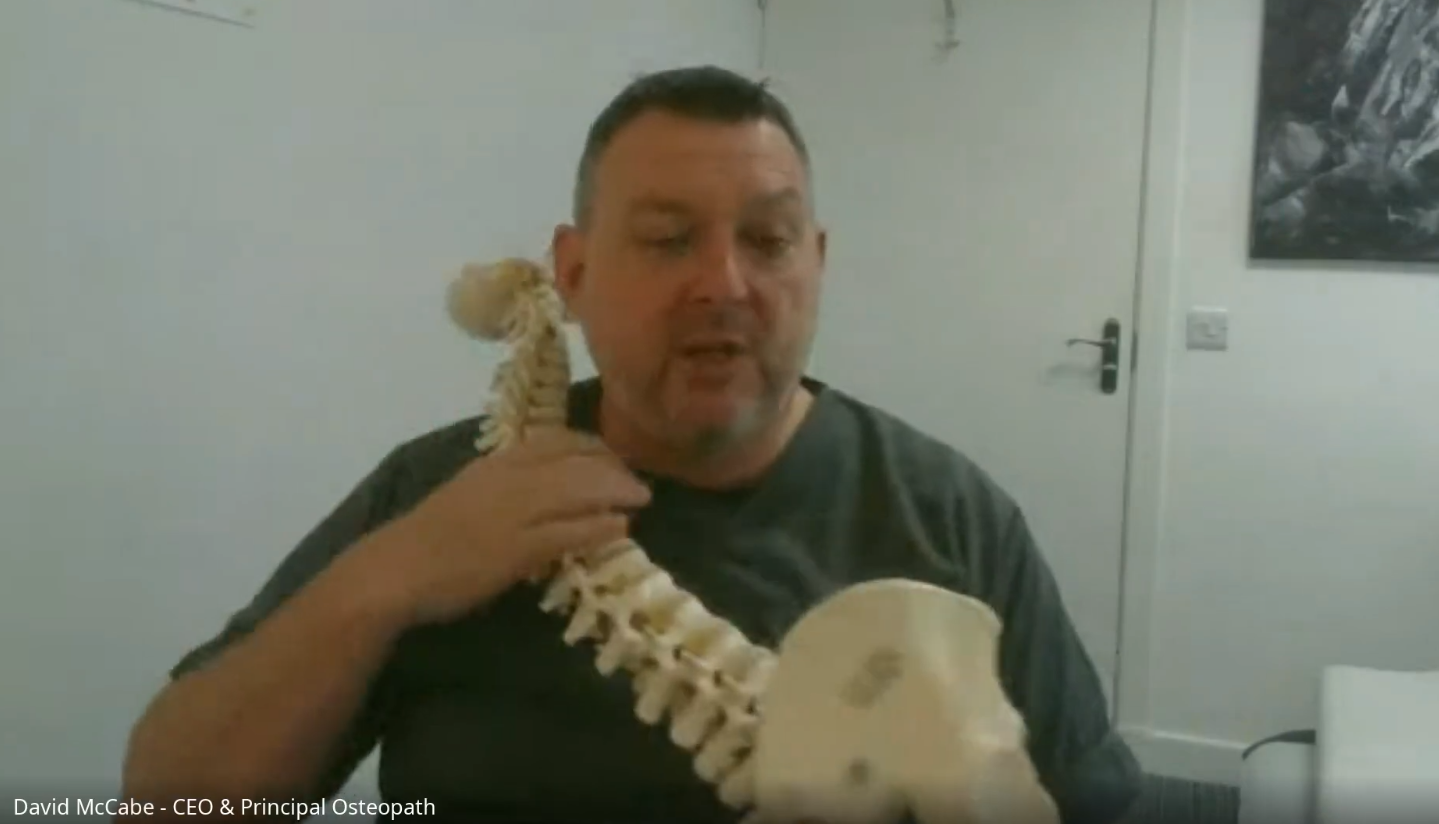
To dig deeper into what is going on, and how the right pillow support can help, Natalie sat down with senior osteopath Dr David McCabe from Back to Life Clinics.
David has more than 20 years of clinical experience treating everyone from desk workers to elite athletes.
In this conversation, he explains why the lower body is the crossroads of the body, why hip pain is often not really about the hip, and how something as simple as a knee pillow can change the way the whole spine behaves at night for the better.
Lower Body Pain: “Bread and Butter” In The Clinic
To start, we wanted to get to the bottom of the issue and find out just how prevalent lower body pain issues are. David let us know straight away that it's a huge issue with the general population and his patients.
"We have osteopaths, physiotherapists and sports therapists here. We see everybody from desk workers with tight hips, to elite level athletes who have pushed one rep too many.
But if I am honest, lower body issues are absolute bread and butter. I would say about 60 to 70 percent of my caseload relates to hips and low back."
David goes on further to explain why, "If you think of the hips, pelvis and lower back as the crossroads of the body, it makes sense. That whole weight bearing structure that transfers load from the torso to the legs is constantly compensating for whatever else is going on.
If the lower body is not happy, nothing is. You end up compensating all the way up and down the chain. I quite often see issues further up, like neck problems, actually being thrown out by lower back issues."
Signs Your Hip Pain Is Coming From Your Lower Back
It was really interesting to hear David explain that for many people their hip pain is actually caused by their lower back, so Natalie asked for some signs that might indicate their hip pain is a lower back issue.
David's answer was straight to the point and super helpful, "There are a few classic clues. If the pain is quite vague and hard to pinpoint, or if it shoots into the groin or front of the thigh, that makes me think of the lumbar spine.
I jokingly call it the 'Y front line'.
If somebody traces a line where the leg of their underpants would go, down into the groin and front of the thigh, that is a typical referral pattern from the lower back, not from the hip joint.
Another giveaway is when movement of the back reproduces the hip pain more than actual hip movements. If someone bends or arches their back and that flares up what they call hip pain, then I am much more suspicious of the lumbar spine as the culprit."
Shop The Groove Adjustable Knee Pillow
Biggest Mistake People Make When Trying To Relieve Back & Hip Pain At Night
We're constantly talking to people here about their sleep pain issues and we often hear some unique solutions!
But we also wanted to hear from the professionals and so Natalie asked David what the most common mistake people make when people are trying to relieve their back and hip pain while sleeping, the answer might surprise you.
"I think a big one is this mental picture people have of the “perfect” sleep posture.
They imagine lying completely straight, like a plank. They think being perfectly symmetrical is best for the body to recover. In reality, that often forces the spine and pelvis into a very unnatural position.
Your spine wants support, not symmetry. If you are lying on your side with nothing between your knees, you end up spending the whole night twisted like a spiral staircase. The top leg drops down, drags the pelvis with it and that torques the lower back.
Over hours every night, that is going to cause mischief.
The Sleep Foundation have said around 65 percent of people sleep on their side. Some studies have shown it even higher!"
Natalie pointed out here how our own research showed the same, "We have done surveys with Groove customers where up to 80 percent of people say they are mostly or always side sleepers.
If most of those people have no support between the knees or under the legs, that is a lot of twisted spines every night."
Online Consultation With Dr David McCabe
Now we get on to the good stuff, David was kind enough to do a mini consultation with Natalie to help with her own hip and pelvis issues!
Natalie started off by explaining her issues first, "I have also been struggling myself with chronic pain in my hips and pelvis and wondered if you would be willing to give me a quickfire consultation.
For me, it started as burning and throbbing on the outside of the hips, in the widest part.
It feels like someone has put a Bunsen burner on one specific spot on both sides after walking, exercising or sitting at my desk. Over the last year that has spread and now I get a deep, burned out pain right in the centre of the hip where the femur meets the socket.
I have had scans that ruled out bone spurs or bony growths, so there is nothing skeletal going on, but I cannot seem to get to the bottom of the burning pain.
What could we be looking at?"
David asked how long Natalie's been suffering with this issue, explaining she's been experiencing flares of pain for 18 months, with bad patches for a week or so that then dies down before flaring up again.
David then asked, "And what is your background with sport or movement?"
It turns out Natalie is quite sporty and has always been, here she explains!
"In my youth I did quite a lot of intense ballet, then moved into powerlifting and heavy gym work. More recently it has been more yoga, which I thought was helping, but with the hypermobility I now suspect some of that stretching has probably overstrained my joints."
The reason is becoming clear to David and he starts to diagnose, "That all fits. I tend to find that people with hypermobility often do not really pay the price in their twenties.
It is usually later, once the body starts changing, especially for women with a wider pelvis. The angle from the outside of the hip down to the knee, called the Q angle, is more marked.
If you imagine the femur as a plank on a pirate ship. If the plank is straight, there is not much stress. If you hang a pirate off the end of it all day, the plank will start to bend and strain at the base. That is what is happening where the femur meets the pelvis. Constant loading at an angle irritates the tissues.
If the outer side is very sore to touch, particularly over the bony “knuckle” on the side of the hip, I would be thinking about bursitis.
The bursae are like mini Groove pillows around the body. Little fluid filled sacs that stop tissue rubbing and getting bashed. If they get constantly irritated, they start to overproduce fluid and get inflamed and grumpy.
But in your case, the really important clue is that when you lie on your side, it is the uppermost hip that hurts, not the one you are lying on.
That makes me think this is less about the bursa you are lying on and more about an inflammatory pattern coming from the low back and hip flexors wrapping around.
I would be very interested in looking at your lower back and sacroiliac joints. I would also test whether a cold pack across the lower back gives you relief while you are sitting. If it does, that would support the idea that the low back is playing a big part."
Shop The Groove Adjustable Pillow

How A Knee Pillow Actually Changes Your Alignment
David answered the burning question we're all keen to understand when you're wondering whether to get a knee pillow or not, 'what is actually happening when someone sleeps with a pillow between their knees?'
Turns out David is a big fan of Groove pillows! "One of our clinic core values is integrity, so I can say this very honestly. I have been using a Groove knee pillow for two years and my own back pain has improved a lot as a result.
As an osteopath, I spend my days leaning over couches, treating people of all shapes and sizes. That puts a lot of strain on my own back. I cannot always get treatment when I want it, so I rely on good aids at home.
Mechanically, it makes a lot of sense. When you lie on your side with nothing between your knees, there are strong pressure points on the inside of the knees. We do not like pressure there.
That is one of the things that makes babies roll and crawl in the first place. Adults do the same. You end up slipping one knee over the other in the night to get comfortable, and that pulls the pelvis down and twists the spine."
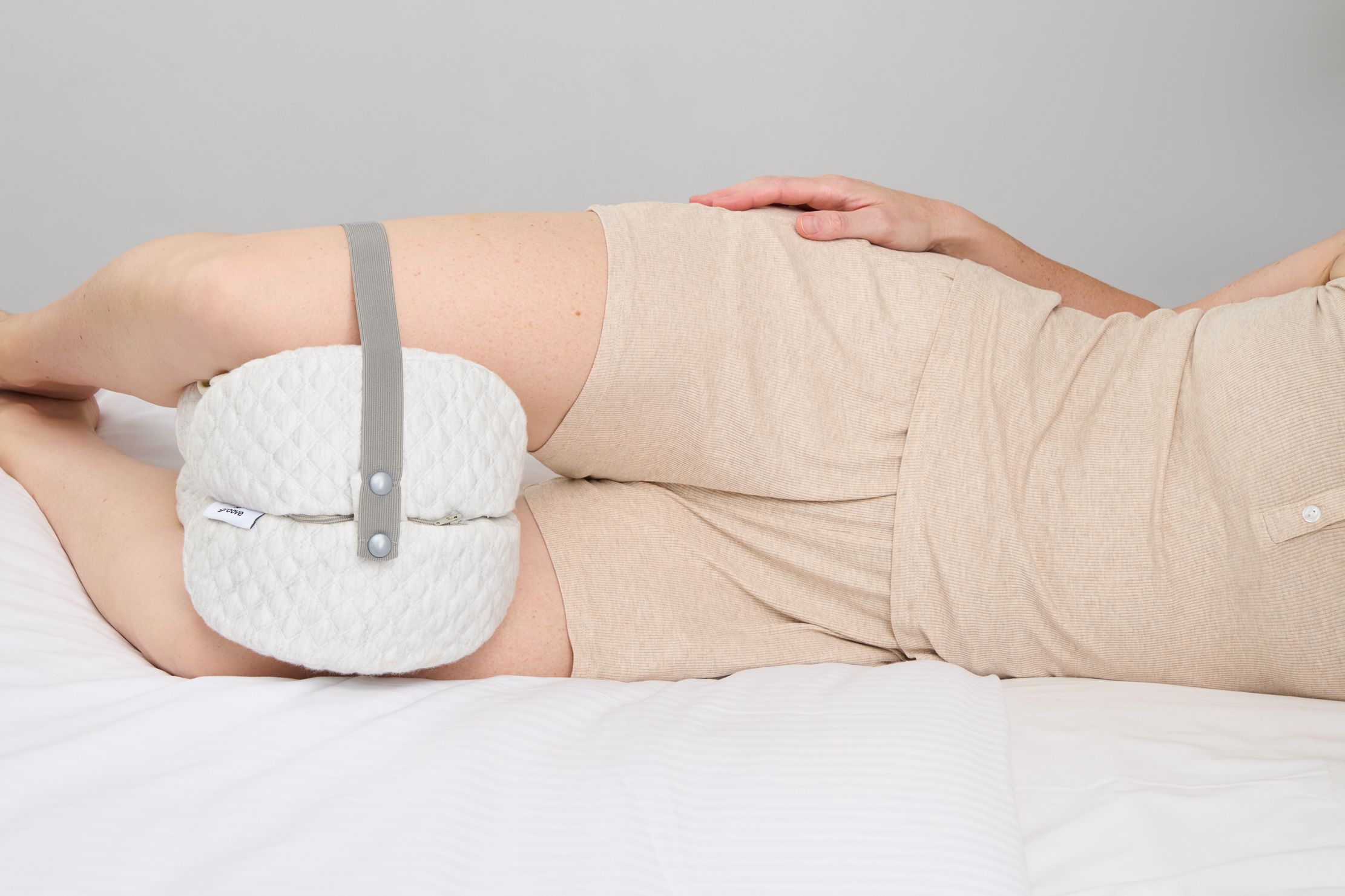
"A properly placed knee pillow stops that. It keeps the knees at the same height, keeps the pelvis level and reduces the twist through the lumbar spine.
That also means the upper spine and neck are less likely to be dragged out of position.
So someone might be using a brilliant neck pillow and still not getting relief because the lower half of the body is working against them.
It must sit between the knees, not just between the thighs or shins. And firmness matters. If the pillow is too soft, it just collapses and you are back to square one.
If it is too hard, it feels as bad as knocking your knees together. You want something that supports, rather than just cushions."
Shop The Groove Adjustable Knee Pillow
First Impressions Of The Groove 3-in-1 Combination Knee Pillow
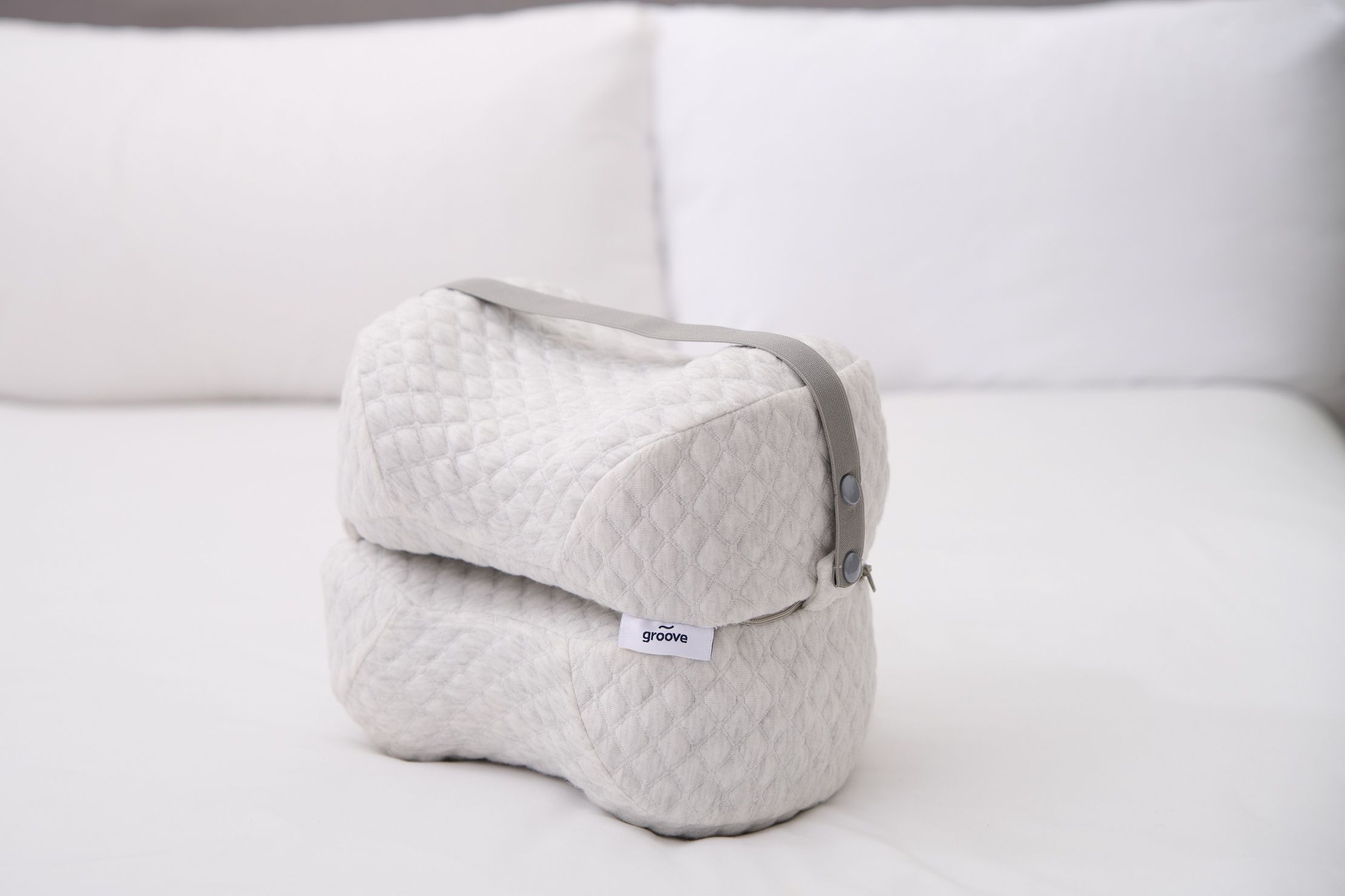
In the interview, Natalie explained that one of the reasons we developed the new Groove 3 in 1 Combination Knee Pillow is that not everyone has the same pelvis width or leg shape.
Women often have a wider pelvis, some people have longer or thicker legs, and we wanted a design that can be adjusted to different bodies and to both back and side sleeping. We actually sent one of our new knee pillows to David and were keen to get his first impressions on the pillow!
"I was genuinely curious about how you were going to improve on the Groove X knee pillow, because I have used that for a couple of years.
What I liked most was the versatility.
You can use it as a classic knee pillow, but you can also adjust the thickness to suit your own body. Some people like more space between their knees, some less, and being able to adapt it helps people listen to their own body.
For those who shift a lot at night, from side to back and back again, the ability to open it out and support under the thighs and low back is very useful.
Lying flat on your back is not great for the lumbar spine.
Lifting the thighs a little tilts the pelvis, opens the lower back and takes pressure off. The contouring feels more natural than the blocky supports you often see.
From a clinical point of view, I like that it works for both back and side sleepers. That is what makes it easy to recommend"
Final Thoughts
Speaking with David really highlighted how interconnected the hips, pelvis and lower back are and how much our sleep posture influences all three.
Whether the pain starts in the joint itself or is being referred from the lower back, the way we position our body at night can either aggravate symptoms or give the body the space it needs to recover.
Small changes like adding support between the knees or adjusting how the pelvis is held can break the cycle of irritation, helping people wake up with less stiffness and more confidence in their day ahead.
If lower body discomfort has been affecting your sleep, now is the time to experiment with the support your body has been missing.
The new Groove 3-in-1 Combination Knee Pillow was designed to adapt to different body shapes, sleep positions and pain patterns, giving you personalised support through the night.
Whether you’re a side sleeper, back sleeper or someone who shifts positions, it helps keep the pelvis level, the spine aligned and pressure off the hips and lower back.