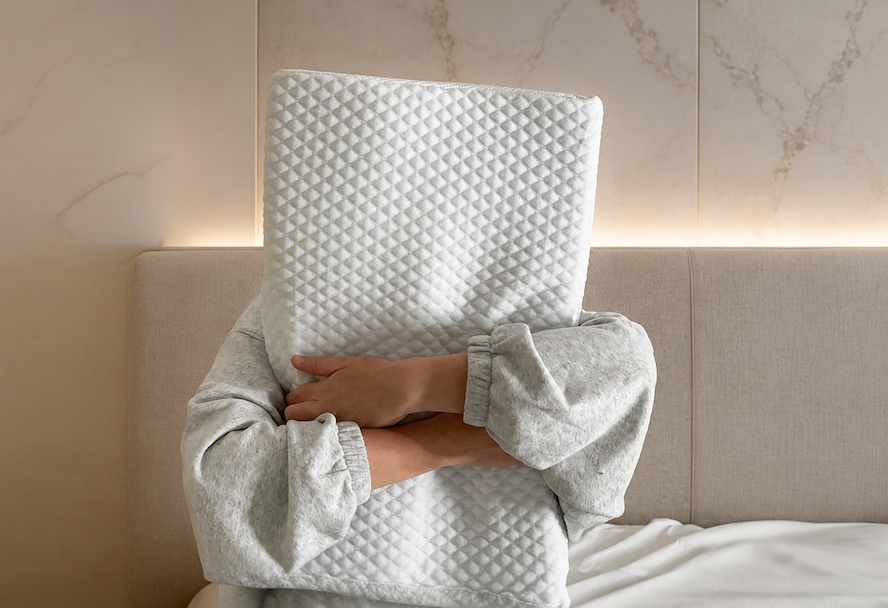
Hypermobility means the joints move beyond the normal range, often leading to instability, pain, and increased sensitivity.
Ehlers-Danlos Syndrome (EDS) is a genetic connective tissue disorder characterised by hypermobility, caused by mutations in collagen that make joints and tissues more fragile.
Many people looking for the best pillow for Ehlers-Danlos Syndrome or hypermobility discover that alignment-focused pillows make the most immediate difference.
Here’s everything you need to know to reduce daily symptoms.
What To Look For In A Pillow If You Have Hypermobility
Studies have shown that those with EDS syndrome have trouble falling asleep and staying asleep for up to 8 hours a night. This is due to factors like pain and discomfort. (Crews-Stowe et al., 2025)
A good pillow should be more than just comfortable for hypermobile folk. If you have hypermobility, it helps support your joints while you sleep.
Here’s how to find the best pillow for hypermobility neck or EDS.
Sleep & Lifestyle Tips To Prevent Wrinkles While Sleeping
You’re not the only person wondering ‘does sleeping on side cause wrinkles?’ More people are Googling this these days, especially since this has become a hot topic on social media.
Below are the six main tips and lifestyle changes you can make to reduce the chances of wrinkles.
1. Cervical Support Pillow (Non-Negotiable!)
Hypermobility in the neck means ligaments don’t provide the usual stability, so a soft, sinking pillow can allow the head to collapse into unsafe angles.
A firm, structured cervical design keeps the neck in neutral alignment, preventing overstretching and reducing morning stiffness.
Groove’s Adjustable Pillow features a contoured shape that cradles the head while maintaining a supported neck curve. With its adjustable height inserts, it’s designed to offer stable, personalised alignment, making it a comfy choice for anyone seeking the best pillow for hypermobility.
2. Adjustable Height For Joint Sensitivity
Hypermobile joints respond dramatically to even the smallest height changes. Too high or too low, and the neck is instantly pulled out of neutral. That’s why adjustability is essential.
Being able to fine-tune your pillow height lets you match your exact shoulder width and sleeping style, ensuring your head stays at the right angle all night.
3. Shoulder & Spine Alignment
A cervical pillow helps prevent the most common shoulder and spine alignment issues for hypermobile sleepers, including:
- Shoulders collapsing inward
- The head tilting downwards
- Neck ligaments overstretch during the night
Keeping the neck and shoulders in one straight line reduces strain across the spine and can significantly lessen symptoms on waking. Plus, it leaves you comfier throughout the night!
4. Stability During Movement
Many hypermobile people tend to move excessively at night because their joints lack natural stability. This can lead to poorer sleep quality and grogginess the next day.
A contour, cervical pillow acts like a guide rail, stopping the head from rolling into unsafe or unstable positions. Also, better stability equals fewer flare-ups.
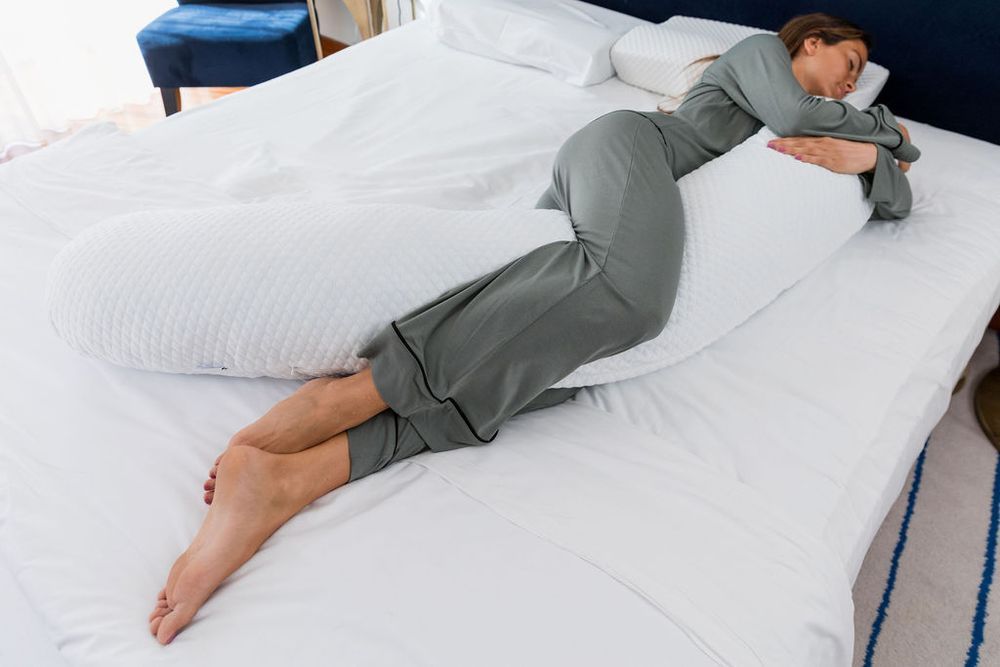
Why Body Pillows Are A Game-Changer For Hypermobility
For some with hypermobility issues, full-body support is best, as hypermobile sleepers can’t maintain it on their own.
Long body pillows provide full-body stability, especially when created with an ergonomic shape and supportive materials like memory foam. They help by:
- Preventing the top shoulder from collapsing when side sleeping
- Reducing hip and pelvic rotation
- Supporting the knees to stop overstretching
- Stabilising the ribcage and thoracic spine
- Reducing neck pressure by aligning the whole chain
Many people with hypermobility find body pillows more comfortable because they gently “lock in” the body, keeping the spine in a safe, neutral position.
The Groove Body Pillow is long, supportive, and designed to reduce joint strain, making it ideal if you’re looking for the best body pillow for hypermobility or even the best body pillow for Ehlers-Danlos Syndrome.
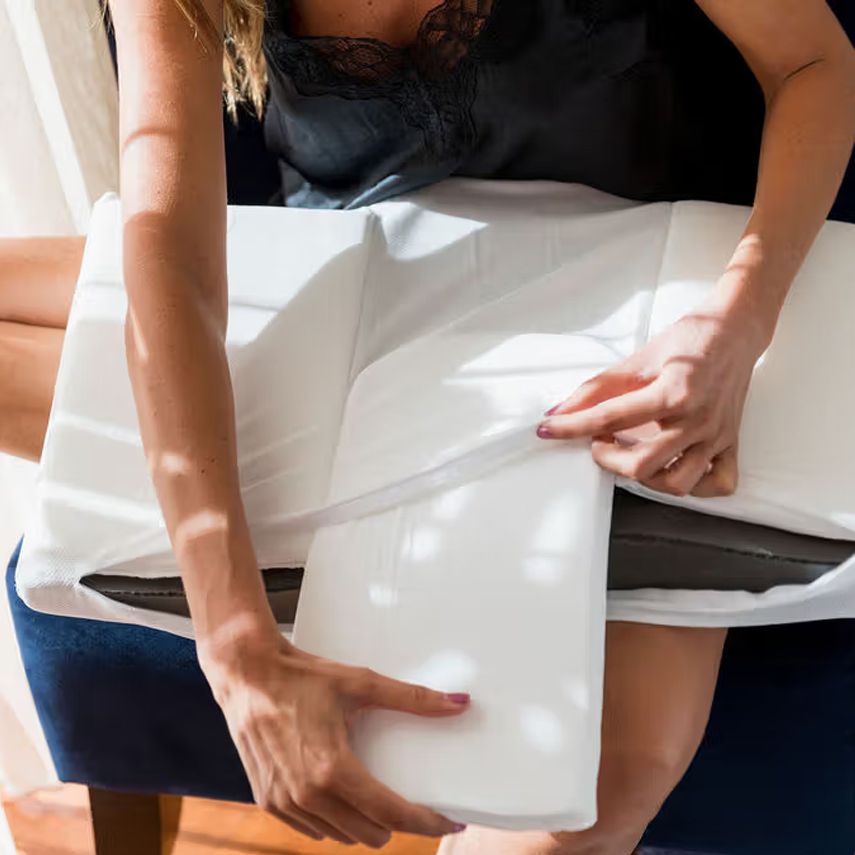
You can even customise the levels of firmness in the pillow, so you can fall asleep with a pillow that’s just right for you!
Pair your specialised pillow with good sleep hygiene, like no caffeine at night and no screens in bed, for a complete evening routine (The Ehlers Danlos Society, n.d.).
How To Set Up Your Pillows For Hypermobility (Step-By-Step)
Getting your pillows in the right spots can make a real difference, turning a tricky night for hypermobile joints into a more supported sleep.
Follow these steps to set up your sleeping station.
1. Start With The Cervical Pillow
Adjust the height inserts to match your shoulder breadth, and then it depends on whether you prefer to sleep on your side or back.
- Side sleepers: Keep your nose aligned with your sternum.
- Back sleepers: Keep the chin neutral, neither lifted nor tucked.
2. Add The Body Pillow For Full-Body Alignment
If you’d like full-body support, and sleep on your side, you can add a body pillow into the mix.
- Hug the body pillow to support the upper shoulder.
- Place it between the knees to prevent hip rotation.
- Keep the top arm supported to avoid collapsing forward.
- Check that your head, spine, and pelvis form one straight line.
3. Stabilise As Needed
Depending on the severity of your hypermobility, you can add small bolsters under the arms, behind the back, or alongside the hips for extra stability.
A bolster is a small supportive cushion designed to keep the body in a stable position and prevent joints from collapsing into uncomfortable angles.
Shop Groove Combination Pillow
When To Seek Professional Help
If you experience persistent headaches, nerve symptoms, neck locking, dizziness on waking, or chronic feelings of instability, it’s worth speaking to a physio or specialist familiar with hypermobility.
Early guidance can prevent symptoms from worsening and help you build a safer, more supportive routine. Always be proactive with your health!
Final Words
The right pillow setup can make sleep more comfortable for many people with hypermobility or EDS. Make sure you’re in an aligned position, and experiment until you feel comfortable.
For supported, adjustable neck alignment, the Groove Adjustable Pillow can be a helpful option, and pairing it with the Groove Body Pillow may offer steadier full-body alignment.
References
- Crews-Stowe, C., Tudini, F., Jung, M.-K., Forman, J., Riley, B., Eton, S. and Levine, D. (2025). Sleep Characteristics in Individuals with Ehlers-Danlos Syndrome. Medical Sciences, 13(3), pp.85–85. doi:https://doi.org/10.3390/medsci13030085.
- The Ehlers Danlos Society. (n.d.). Sleep problems in EDS and HSD. [online] Available at: https://www.ehlers-danlos.com/sleep/.