

How To Get Rid of Menopause Neck Pain (Step-by-Step)

Feeling achy or stiff in the mornings? Menopause neck pain isn’t in your head and you’re not alone at all.
More than 70% of women experience musculoskeletal symptoms during menopause (Wright et al., 2024), due to changes in hormone levels, particularly oestrogen. This makes muscles, joints, and other connective tissues more susceptible to tension and pain.
Not only that, but neck pain often feels worse at night or first thing in the morning, disrupting all-important sleep and daily life.
Here’s a quick guide to neck pain and menopause — and what you can do to get relief!
Can Menopause Cause Neck Pain?
Yes, menopause can directly cause neck pain. If you’re feeling stiff or achy, it could be related to this stage of life.
This is due to declining oestrogen during perimenopause and menopause, causing discomfort such as:
- Muscle tension — Neck and shoulder muscles tighten more easily, leading to stiffness.
- Collagen and connective tissue strength — Reduced elasticity makes tissues more prone to strain.
- Joint lubrication — Less lubrication increases friction in cervical joints.
- Sleep quality — Night sweats and disrupted sleep amplify morning stiffness and soreness. But you can sleep better during the menopause.
Many women report additional neck pain and menopause symptoms such as stiffness, headaches, shoulder tension, and upper back pain.
These are also all directly linked to hormonal shifts, as oestrogen affects tissues and functions across the body. In addition to hormonal decline, psychosocial factors and the ageing process also play a significant role (Santoro, Epperson and Mathews, 2015).
How To Get Rid Of Menopause Neck Pain (Step-by-Step)
1. Fix Your Pillow Height For Your Shoulder Width
Women often need a different pillow height and contour than men due to narrower shoulders and different cervical curvature. So, an adjustable pillow can help you find the right sleeping position.
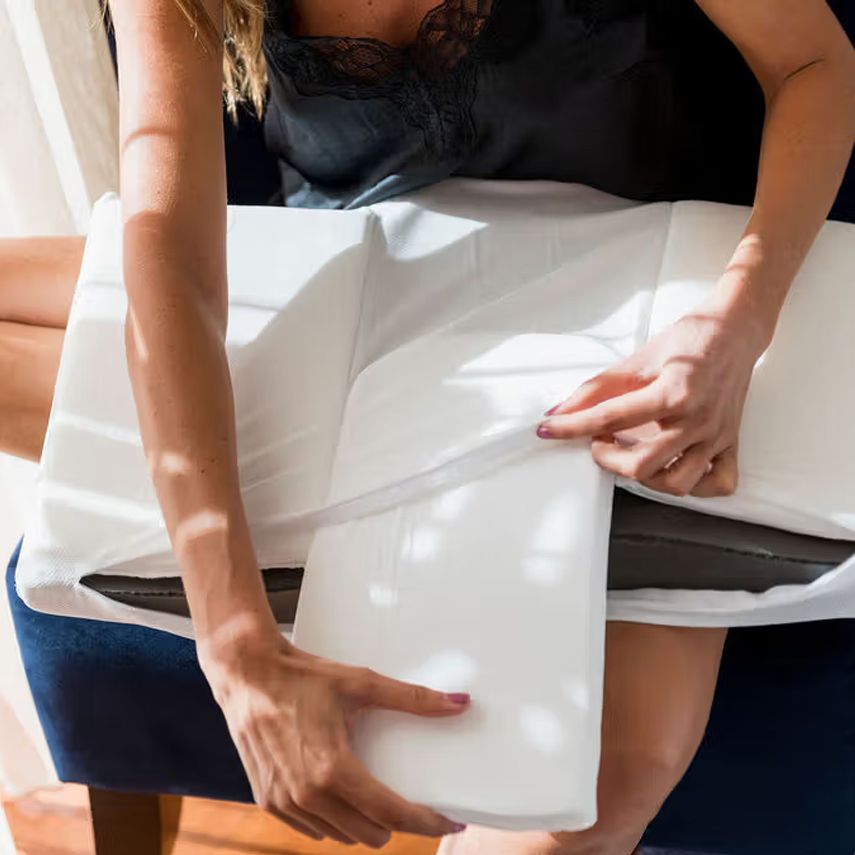
The Groove Adjustable Pillow contains multiple layers for custom height changes, allowing you to tailor the pillow’s loft to your individual neck and shoulder width.
This specialised design helps support healthy spinal alignment and reduces neck strain while sleeping.
Shop Groove Adjustable Pillow2. Support The Cervical Curve
You need to support the cervical curve (the natural inward C-shape of your neck and spine).
A good pillow stops the neck from dropping forward or tilting back.
Proper pillow support maintains natural curvature, easing tension and preventing morning stiff neck menopause discomfort.
3. Maintain Side-Sleeping Alignment
Side-sleepers are prone to misalignment, which can trigger neck pain alongside other issues, such as back aches or menopause hip pain.
An ergonomic memory foam pillow or adjustable pillow helps keep the head, neck, and shoulders in line, reducing compression and pressure throughout the night.
4. Improve Your Back-Sleeping Position
Back-sleeping keeps the neck neutral and supported. However, you still need to maintain a healthy position.
Ensuring your chin remains level prevents strain, while the right pillow fills the gap under your cervical spine, easing perimenopause neck pain.
5. Avoid Stomach Sleeping
Sleeping on your stomach forces the neck into rotation and extension, worsening tension and contributing to menopause and neck pain. Avoiding this position reduces unnecessary strain.
For more information, view Groove’s selection of supportive pillows.
Lifestyle Tips To Reduce Menopause Neck Pain
While a supportive pillow makes a big difference, it’s just the foundation for menopause neck pain relief.
Complement it with:
- Gentle stretching and mobility exercises for neck and upper back.
- Light strength training to stabilise shoulder and cervical muscles.
- Staying hydrated to maintain tissue elasticity.
- Reducing inflammatory foods.
- Improving sleep hygiene.
- Managing stress through breathing exercises or yoga.
These habits work together to ease menopause headaches neck pain and prevent further strain.
Studies have looked at medicine-based and non-medicine-based pain strategies and have found that there’s not a one-fits-all menopause strategy (Strand et al., 2024). It’s recommended that you experiment with the tips above until you find a combination that works for you.

The Role Of Mattresses & Sleep Environment
Sagging or overly soft mattresses can worsen misalignment, amplifying neck pain menopause. Alongside analysing your pillow, it might be time to replace your mattress, especially if it’s older.
The best firmness for menopause pain is medium. This prevents misalignment without sacrificing any comfort.
For the best results, pair an adjustable pillow with a medium-support mattress to ensure proper spinal alignment and overall comfort.
When To Seek Professional Help
Consult a GP, physiotherapist, or menopause practitioner if neck pain is severe and persistent.
You should also seek medical advice if nerve symptoms accompany the pain. Chronic cervical issues, nerve compression, or restricted mobility may require professional assessment.
Early intervention prevents long-term complications. So, don’t put off making the appointment!
Final Words
Small but strategic changes can make a big difference to your comfort during the menopause.
Overall, adjusting pillow height, supporting the cervical curve, and maintaining proper sleep posture are among the most effective ways to reduce menopause neck pain. Combine these with lifestyle improvements to restore better sleep and ease daily stiffness.
Start today with the Groove Adjustable Pillow.
References
- Santoro, N., Epperson, C.N. and Mathews, S.B. (2015). Menopausal Symptoms and Their Management. Endocrinology and Metabolism Clinics of North America, [online] 44(3), pp.497–515. doi:https://doi.org/10.1016/j.ecl.2015.05.001.
- Strand, N.H., D'Souza, R.S., Gomez, D.A., Whitney, M.A., Attanti, S., Anderson, M.A., Moeschler, S.M., Chadwick, A.L. and Maloney, J.A. (2024). Pain during menopause. Maturitas, [online] 191, p.108135. doi:https://doi.org/10.1016/j.maturitas.2024.108135.
- Wright, V.J., Schwartzman, J.D., Itinoche, R. and Wittstein, J. (2024). The musculoskeletal syndrome of menopause. Climacteric: The Journal of the International Menopause Society, [online] 27(5), pp.1–7. doi:https://doi.org/10.1080/13697137.2024.2380363.